11 Tips for building agentic systems
This chapter covers
- Field-tested tips organized by the five agentic layers
- Role-specific guidance for a customer support agent
- Design patterns for a RAG agent system
- A blueprint for a deep research agent
As we near the end of our journey into agent development, we can move beyond theoretical and tutorial sessions to introduce more practical tips. These tips and experiences come from building production-level agents and agentic systems in the trenches. They can help you level up your agent development skills and see how real-world agents operate. By the end of this chapter, you should have a set of practical patterns and checklists you can apply when designing real-world agents and agentic systems.
11.1 Field-tested tips organized by the five agentic layers
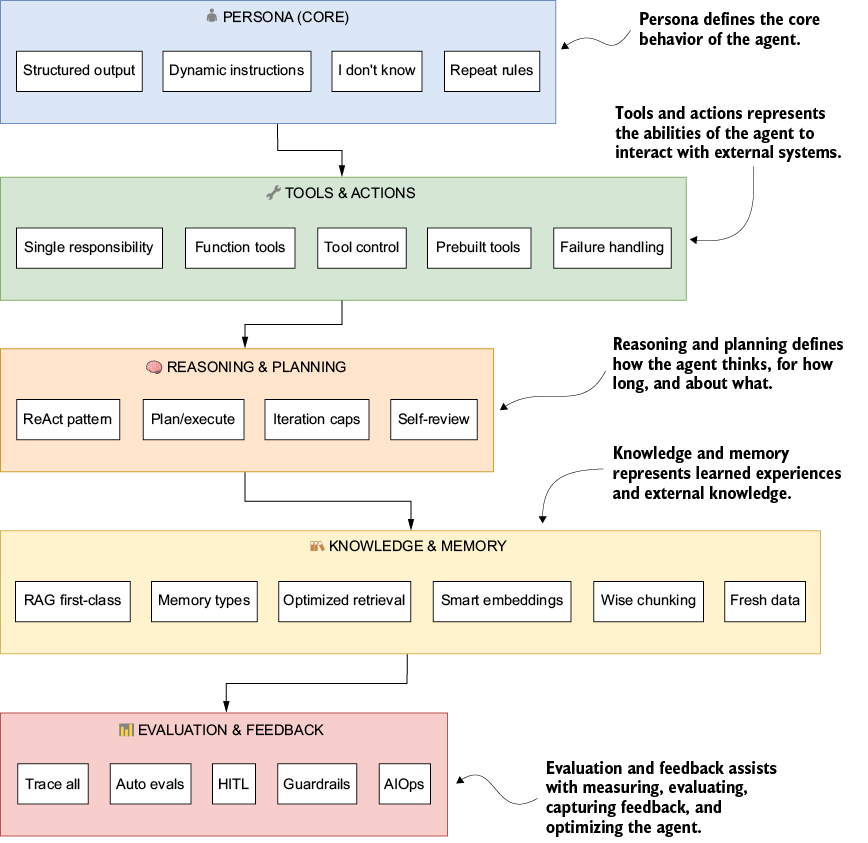
Throughout this book, we have explored agents using the five functional layers of agents: persona, tools and actions, reasoning and planning, knowledge and memory, and evaluation and feedback. Figure 11.1 reminds us of what happens at each layer.
Figure 11.1 The five agent layers. For each layer, the internal boxes represent the patterns that can help improve development of that layer.
Let’s go back through these layers now, looking at practical tips for each one.