16 Coding kata: “Adjacency Matrix”
This coding kata covers
- Using a jagged array to represent matrices
- Implementing a doubly-linked list
- Using parallelism to calculate a matrix adjacency graph
Screaming children are the bane of every sleepy passenger’s existence. Aljen van der Meulen stumbles into his office after an exhausting 30-minute flight from Cape Town to Groningen (flights are much faster in the future), complaining about the seating arrangements. Even the CEO of the airline cannot get a decent seat on a Flying Dutchman Airlines flight.
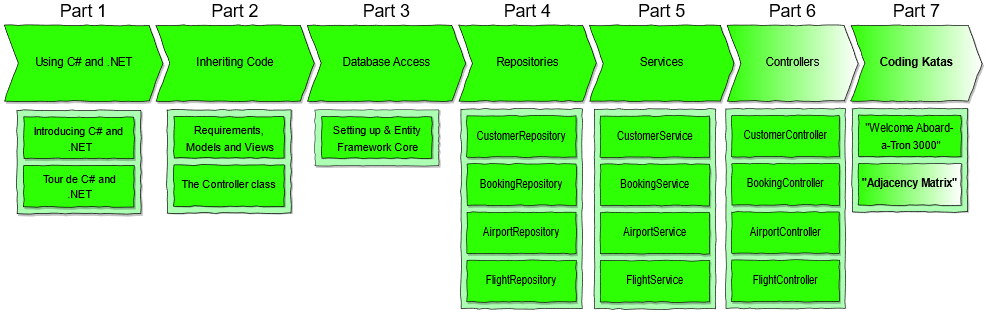
Figure 16.1 In this last coding kata, we look at how to create and display adjacency matrices, as well as how to potentially improve performance by using parallelism.
To keep costs low, the airline configures all of its aircraft in a 3 by 3 seating arrangement. The rows are designed with ultimate comfort in mind, so there are only 2 rows per “block”. In every block, there are two windows for passengers to look out of (passengers do not get windows at their seats) and a sound barrier that blocks out all sounds from other blocks. There is only one class, basic economy, and the standard capacity for an airplane is 48 passengers (or 4 blocks).
Figure 16.2 All planes flying for Flying Dutchman Airlines have a 3 by 3 seating arrangement. The seats are organized in blocks of two rows, each with two windows and a sound barrier.
