1 What is deep learning?
This chapter covers
- High-level definitions of fundamental concepts
- A soft introduction to the principles behind machine learning
- Deep learning’s rising popularity and future potential
Over the past decade, artificial intelligence (AI) has been the subject of intense hype. We’re promised a bright future of intelligent chatbots, self-driving cars, and virtual assistants. Or, alternately, a grim one where human jobs will be scarce and most economic activity will be handled by robots or AI agents. As a machine learning practitioner using R, it’s important to be able to recognize the signal amid the noise.
After reading this book, you’ll be among the select group who can develop these AI systems. So let’s tackle these questions: What has deep learning achieved so far? How significant is it? Where are we headed next? Should you believe the hype? And how does R fit into the picture?
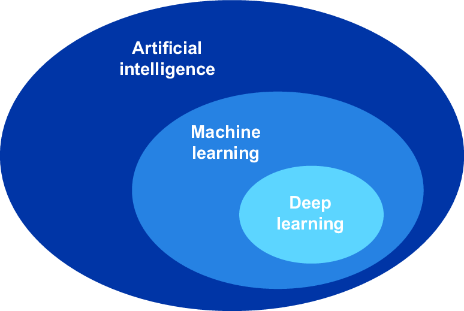
First, we need to define clearly what we’re talking about when we mention AI. What are artificial intelligence, machine learning, and deep learning (figure 1.1)? How do they relate to each other?
Figure 1.1 Artificial intelligence, machine learning, and deep learning