chapter eight
8 Stream Processors
This chapter covers
- Learning some core ideas about stream analytics
- Querying data streams created by Fluent Bit
- Exploring the SQL-like syntax provided for streaming analytics.
- Creating new outputs based on Fluent Bit inputs.
Let’s start by quickly orienting ourselves in the Fluent Bit landscape by seeing how this chapter fits into our technology landscape.
Figure 8.1 Representation of Fluent Bit from a logical architecture perspective, highlighting which aspect of Fluent Bit this chapter will address. Here, we’re particularly interested in the buffer and the stream processing that depends upon the buffer’s capabilities.
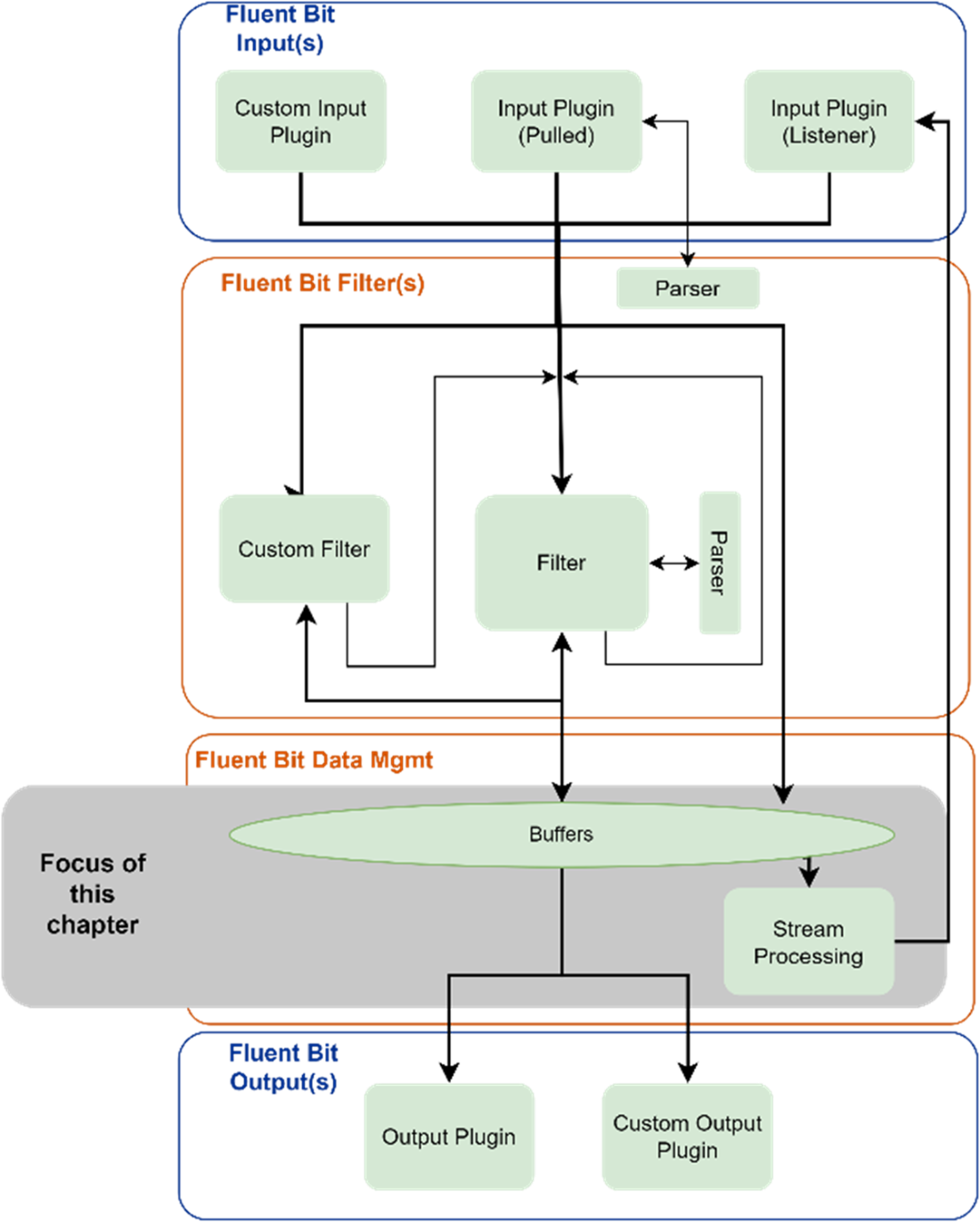
Figure 8.1 gives us some immediate insights into what we can do with streaming, with the flow going back to an input. Similarly, we can also output stream processing results to the relevant output plugins.