concept project in category agile

This is an excerpt from Manning's book Agile Metrics in Action: How to measure and improve team performance.
One of the strengths of agile development methods is the idea that you are delivering a living product, not completing a project. A project is a defined set of time within which something is developed and tracked; a product is a living thing that continues to change to meet the needs of the consumer. This is shown in figure 1.2.
A good example of a project would be building a bridge. It gets designed, built to spec, and then it stands likely unchanged for a long time. Before you start the project you design exactly what you need so you can understand the total cost, and then you track the progress against the plan to make sure you stay on schedule and budget. This process is the art of project management.
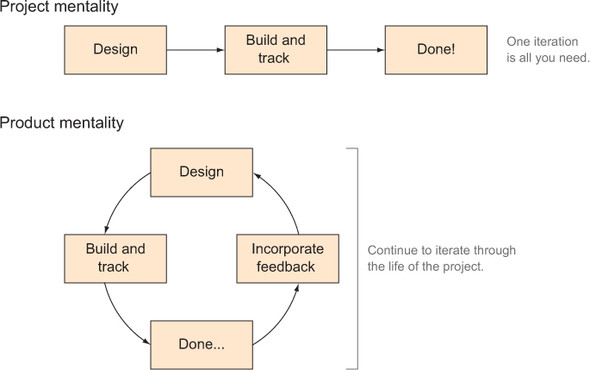
Figure 4.10 shows the GitHub Pulse tab, which gives you an overview of the current state of the project. The most valuable section here is the pull request overview on the left side of the page.
Figure 4.10. The Pulse page on GitHub gives you info on pull requests, issues, and amount of change. This is from the GoCD repo (github.com/gocd/gocd/pulse/weekly).
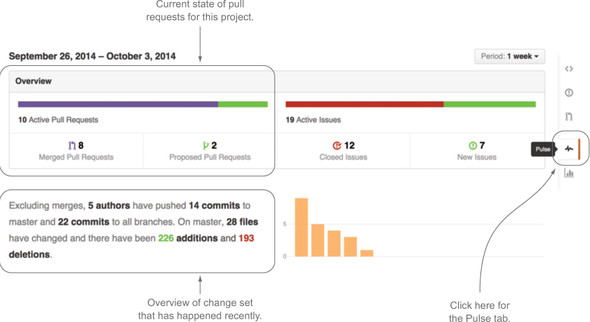
The Pulse tab is pretty cool, but just like checking your own pulse, it only tells you if the project you’re looking at is alive or not. In the context of GitHub, where open source projects tend to live, it’s important to know if a project is alive or dead so potential consumers can decide if they want to use it. To get data that’s more relevant for your purposes, check out the Graphs section. It has the typical breakdowns of CLOC and LOC that you’d expect to see from your source control project. Let’s start with contribution over time, shown in figure 4.11.

This is an excerpt from Manning's book Becoming Agile ...in an imperfect world.
Working software is the primary measure of progress. If you recall, the customer is primarily interested in working software. So why would you measure progress in terms of anything else? Today, the progress of most software development efforts is measured in terms of their plan. When requirements are complete, the managers say the project is 30 percent complete. In a plan-driven world, this may be correct; but in a value-driven world, where the value is the working software, the project is 30 percent complete when 30 percent of the required functionality is coded, integrated, tested, and deployed. This is a fundamental difference between the agile value-driven world and the traditional plan-driven world. Agile processes promote sustainable development. The sponsors, developers, and users should be able to maintain a constant pace indefinitely. In traditional development, the team often has to work late toward the end of a project, although at the beginning of the project they may have taken 2-hour lunch breaks. This is primarily due to the way project activities are distributed across the project’s lifecycle. There isn’t much for developers to do at the beginning of the project, but at the end everything is put on their shoulders because of tight delivery schedules. With agile development, you deliver every two weeks or so, and development begins with the first iteration. Efforts are distributed more consistently throughout the project lifecycle, which leads to a constant development pace for the team.
Discovered a problem deep into a project, and had a team member tell you they knew about the issue all along
In our experience, there is usually time to refine feature information after an idea makes it through the feasibility gateway. On occasion, you may have a project that must go directly from feasibility to planning; this may be due to project urgency, or a project may be so small that refinement can occur during the Planning phase.