concept retrospective meeting in category agile

This is an excerpt from Manning's book Becoming Agile ...in an imperfect world.
First, you’ll give participants time to reflect on the project before the retrospective meeting. Second, you’ll collect opinions from the team before the meeting, aggregate the information, and publish the results back to the team to review before the meeting. Finally, you’ll prioritize the issues identified during the retrospective and post them prominently in the team work area.
When the team has reviewed the survey, you can get them together for the retrospective meeting. If you have a team room or shared area, you can conduct the survey there, but sometimes it helps to find a conference room or other venue to prevent distractions.
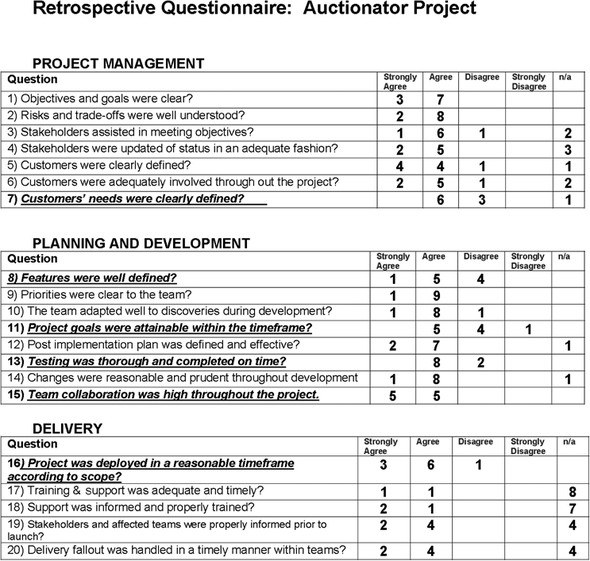
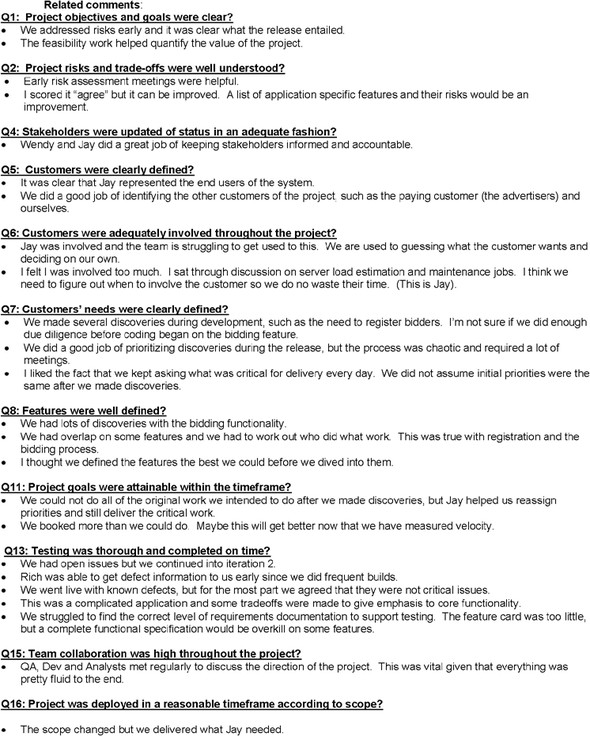
Most teams have limited time for the retrospective meeting and usually complete it in 60 to 90 minutes. Because time is limited, you should discuss the most important areas first. The most important items to focus on are things you’re doing well and things you’re doing poorly. You can highlight these items in the survey so the team knows you’ll begin with them (see figures 22.3 and 22.4).
Figure 22.3. The retrospective survey results. A facilitator highlights the areas the team should spend the most time on during the meeting, focusing on areas where the team agrees they’re doing well, where they have issues, and areas where they’re split. The Auctionator retrospective has 10 attendees, so each row totals 10. Each vote equals one attendee.