concept movement in category AI

This is an excerpt from Manning's book Grokking Artificial Intelligence Algorithms.
In the maze example, the algorithm needs to understand the current position of the player in the maze, evaluate all possible choices for movement, and repeat that logic for each choice of movement made until the goal is reached. By doing this, the algorithm generates a tree with a single path to the goal.
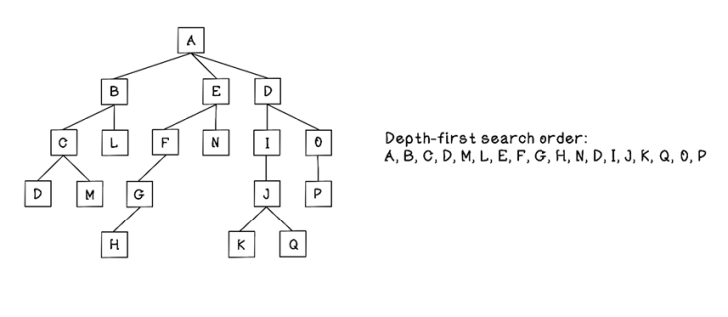
Uninformed search algorithms such as breadth-first search and depth-first search explore every possibility exhaustively and result in the optimal solution. A* search is a good approach when a sensible heuristic can be created to guide the search. It computes more efficiently than uninformed search algorithms, because it ignores nodes that cost more than nodes already visited. If the heuristic is flawed, however, and doesn’t make sense for the problem and context, poor solutions will be found instead of optimal ones.
The move_agent
function is responsible for moving the agent north, south, east, or west, based on the action. It determines whether the movement is within bounds, adjusts the agent’s coordinates, determines whether a collision occurred, and returns a reward score based on the outcome: