concept particle swarm optimization in category AI

This is an excerpt from Manning's book Grokking Artificial Intelligence Algorithms.
Particle swarm optimization is another swarm algorithm. Swarm intelligence relies on emergent behavior of many individuals to solve difficult problems as a collective. We saw in chapter 6 how ants can find the shortest paths between destinations through their use of pheromones.
Bird flocks are another ideal example of swarm intelligence in nature. When a single bird is flying, it might attempt several maneuvers and techniques to preserve energy, such as jumping and gliding through the air or leveraging wind currents to carry it in the direction in which it intends to travel. This behavior indicates some primitive level of intelligence in a single individual. But birds also have the need to migrate during different seasons. In winter, there is less availability of insects and other food. Suitable nesting locations also become scarce. Birds tend to flock to warmer areas to take advantage of better weather conditions, which improves their likelihood of survival. Migration is usually not a short trip. It takes thousands of kilometers of movement to arrive at an area with suitable conditions. When birds travel these long distances, they tend to flock. Birds flock because there is strength in numbers when facing predators; additionally, it saves energy. The formation that we observe in bird flocks has several advantages. A large, strong bird will take the lead, and when it flaps its wings, it creates uplift for the birds behind it. These birds can fly while using significantly less energy. Flocks can change leaders if the direction changes or if the leader becomes fatigued. When a specific bird moves out of formation, it experiences more difficulty in flying via air resistance and corrects its movement to get back into formation. Figure 7.1 illustrates a bird flock formation; you may have seen something similar.
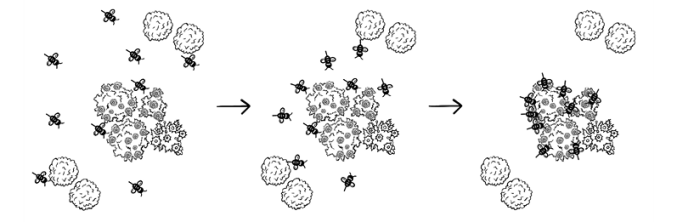
Figure 7.3 A bee swarm converging on its goal