concept phrase in category AI

This is an excerpt from Manning's book AI-Powered Search.
Intelligent: able to deliver predictive type-ahead, to understand what users mean (spelling correction, phrase and attribute detection, intent classification, conceptual searching, and so on) to deliver the right answers at the right time and to be constantly getting smarter.
The phrase "unstructured data" really is a poor term to describe textual content, however. In reality, the terms and phrases present in text encode an enormous amount of meaning, and the linguistic rules applied to the text to give it meaning serve as their own structure. Calling text unstructured is a bit like calling a song playing on the radio "arbitrary audio waves". Even though every song has unique characteristics, most typically exhibit common attributes (tempo, melodies, harmonies, lyrics, and so on). Though these attributes may differ or be absent from song to song, they nevertheless fit common expectations that then enable meaning to be conveyed by and extracted from each song. Textual information typically follows similar rules - sentence structure, grammar, punctuation, interaction between parts of speech, and so on. Figure 2.1 shows an example of text which we’ll explore a bit more in the upcoming sections as we investigate this structure further.
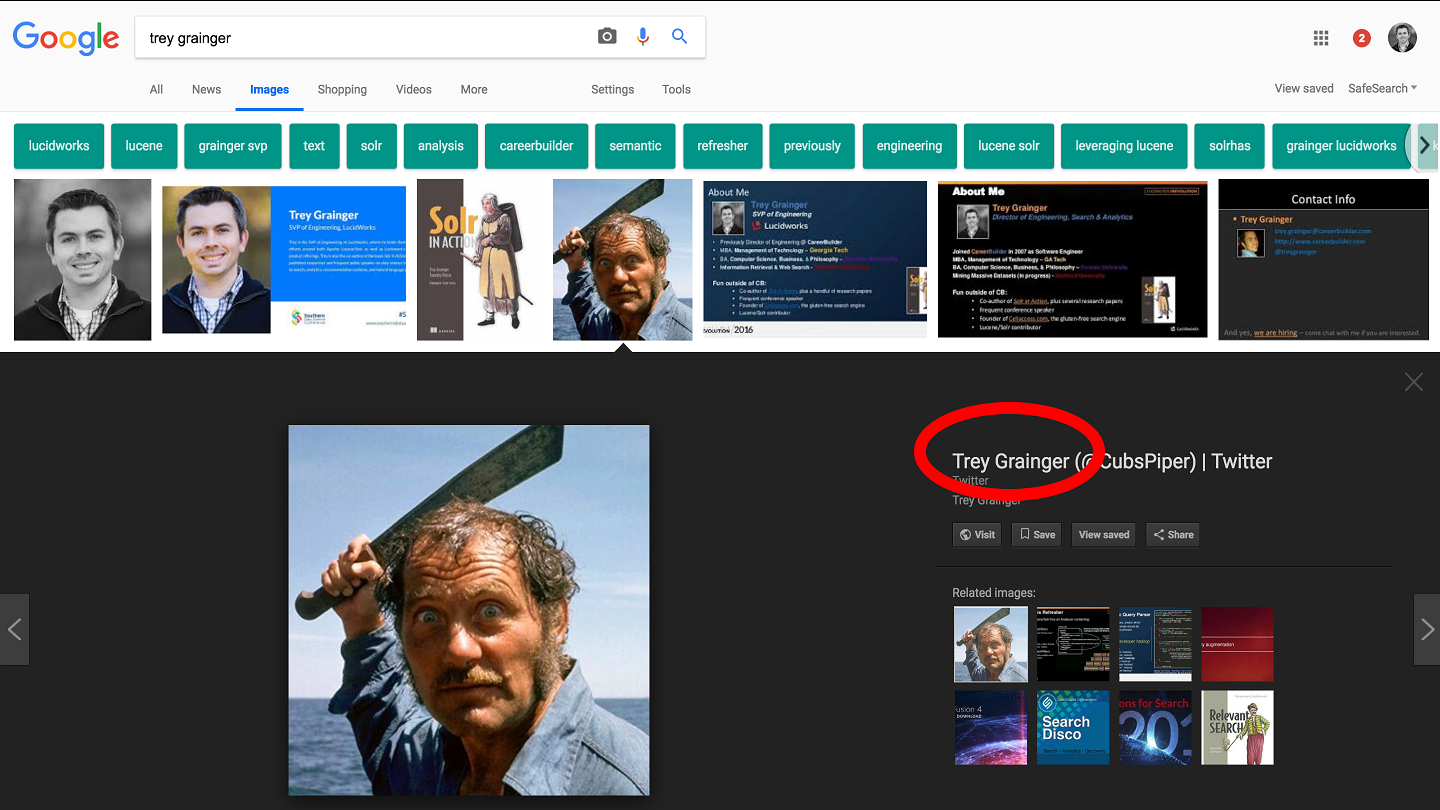
Figure 2.7. Polysemy. This image shows a Google search for the phrase "Trey Grainger". Pictures of multiple different people are returned because those people’s names share the same spelling, making the term sequence "Trey Grainger" ambiguous.