concept nature in category algorithms

This is an excerpt from Manning's book Algorithms and Data Structures in Action.
18.1.1 Inspired by Nature
Simulated annealing was inspired by metallurgy, mimicking its cooling process to drive a system from chaotic to ordered behavior. Nature, as a matter of fact, has often been a great source of inspiration for mathematics and computer science: just think about neural networks, probably the most pervasive of these examples, at the time of writing.
For biological processes, like neural networks’, it's not hard to imagine why: they have been adapted and perfected over million of years, and since their efficiency is tight with organisms’ survival, we can find clever and efficient solutions everywhere in nature.

This is an excerpt from Manning's book Grokking Artificial Intelligence Algorithms.
Current has next neighbor? If the current node has more possible moves to make in the maze, that move can be added to the stack to be processed. Otherwise, the algorithm can jump to step 2, where the next object in the stack can be processed if the stack is not empty. The nature of the LIFO stack allows the algorithm to process all nodes to a leaf node depth before backtracking to visit other children of the root node.
Current has next neighbor? If the current node has more possible moves to make in the maze example, that move can be added to be processed. Otherwise, the algorithm can jump to step 2, in which the next object in the stack can be processed if it is not empty. The nature of the LIFO stack allows the algorithm to process all nodes to a leaf-node depth before backtracking to visit other children of the root node.
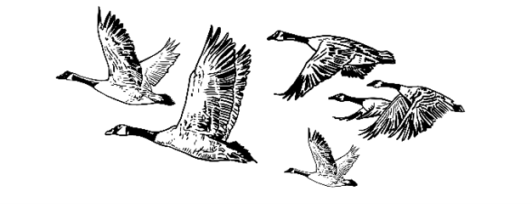
Figure 7.1 An example bird flock formation