concept process in category algorithms

This is an excerpt from Manning's book Algorithms and Data Structures in Action.
We will skip these steps for the 0-1 knapsack dynamic programming algorithm, both because it’s an algorithm, not a data structure, and it is vastly described in literature. Not to mention that in this chapter its purpose was just illustrating both:
Listing 11.6 A curried version of hasItemX
function hasItem(item, node)                        #1
  return item in node.shop.items                        #2

nn = fNN(root, customerLocation, hasItem(X))#3
In the previous chapters we have described, implemented and applied three data structures designed to efficiently solve nearest neighbor search; when we moved to their applications, we mentioned that clustering was one of the main areas where an efficient nearest search could make a difference. So far we had to delay this discussion, but now it’s finally time to put the icing on the cake, and get the best of our hard work. In this chapter, we will first briefly introduce clustering, explaining what it is and where it stands with respect to machine learning and AI. We’ll see that there are different types of clustering, with radically different approaches, and then we will present and discuss in detail 3 algorithms that uses different approaches; by going through the whole chapter readers will be exposed to the theoretical foundations for this topic, learn about algorithms that can be implemented or just applied to break down datasets into smaller homogeneous groups, and also, in the process, get a deeper understanding of nearest neighbor search and multi-dimensional indexing.
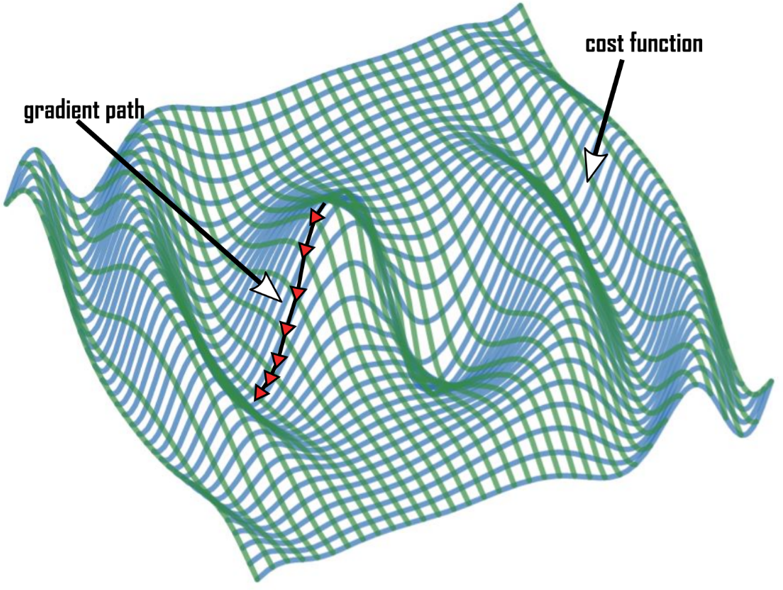
Figure 16.15 Gradient descent applied to a function of 2 variables. The cost function defines a surface.

This is an excerpt from Manning's book Grokking Artificial Intelligence Algorithms.
By using AI, we can identify and block potential attacks on servers. Some large internet companies store data about how specific individuals interact with their service, including their device IDs, geolocations, and usage behavior; when unusual behavior is detected, security measures limit access. Some internet companies can also block and redirect malicious traffic during a distributed denial of service (DDoS) attack, which involves overloading a service with bogus requests in an attempt to bring it down or prevent access by authentic users. These unauthentic requests can be identified and rerouted to minimize the impact of the attack by understanding the users’ usage data, the systems, and the network.
Exploration—The process of finding a variety of possible solutions, some of which may be good and some of which may be bad
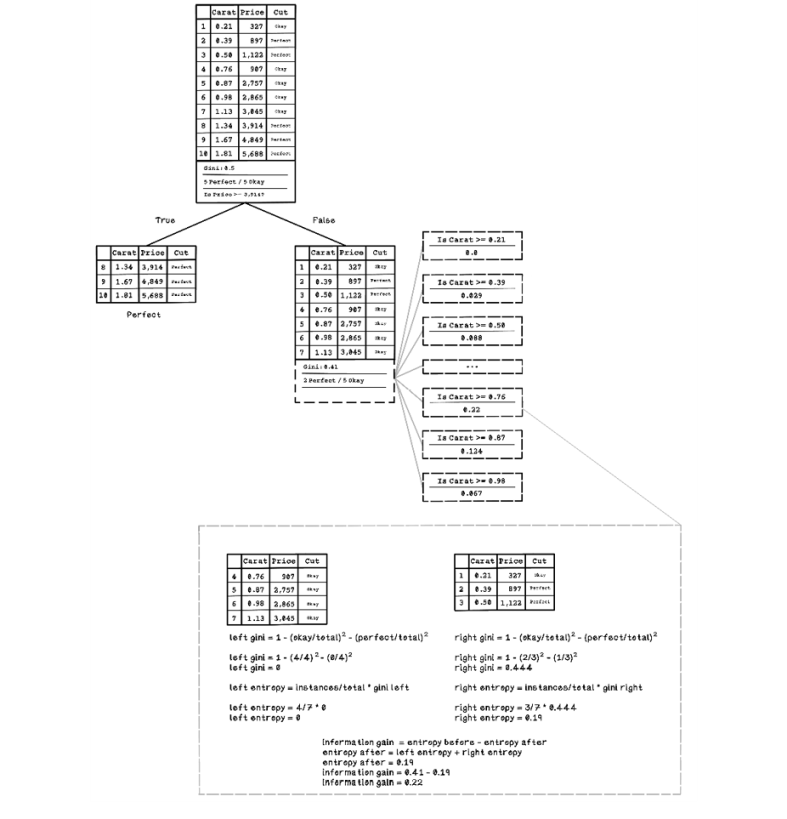
Figure 8.25 Illustration of data split and information gain based on a question at the second level