concept everything in category angular

This is an excerpt from Manning's book Getting MEAN with Mongo, Express, Angular, and Node.js 2ED.
An alternative approach to hosting a Node.js application is doing it yourself on a dedicated server or virtual server from a cloud provider like AWS or Azure, on which you can install anything you need. But production server administration is a topic for another book! And although you could independently swap out any of the other components with an alternative technology, if you take Node.js out, everything that sits on top of it changes.
The good news is that you don’t have to build everything from the ground up. Several open source analytics integrations for Angular are available online, addressing most of the major analytics providers. You still have to integrate them into your application and make sure that everything is working correctly, but you don’t have to do everything from scratch.
Another way is to keep things simple and contained by having everything inside a single Express project. With this approach, you have only one application to worry about hosting and deploying and one set of source code to manage. This is what do with Loc8r: creating one Express project that contains a few subapplications. Figure 2.12 illustrates this approach.
This is an excerpt from Manning's book Angular in Action.
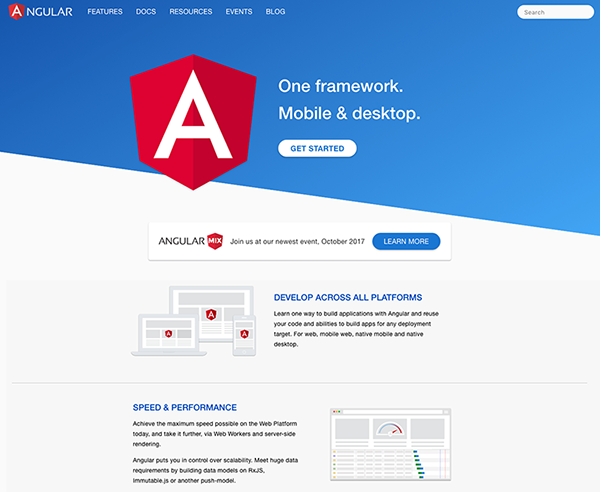
Figure 1.1 The Angular website is a great resource for documentation, events, and everything about Angular.
Keep in mind that Angular is constantly evolving, and new releases will add additional capabilities and changes to the platform and tooling. I expect everything in this chapter to remain accurate in principle over time, but a number of specifics will in fact change, so keep an eye on the releases and take advantage of improvements as they arrive.