concept bookie in category apache pulsar

This is an excerpt from Manning's book Apache Pulsar in Action.
The ESB’s other significant contribution to the evolution of the messaging system was its focus on integration with external systems which forced messaging systems to support a wide variety of non-messaging protocols for the first time. While ESB’s still fully-support AMQP and other pub/sub messaging protocols, a key differentiator of ESB was its ability to move data onto and off of the bus from non-message-oriented systems such as email, databases, and other third-party systems. In order to do this, ESBs provided SDKs that allowed developers to implement their own adapters to integrate with their system of choice.
Figure 1.10: Enterprise Service Buses supported the integration of non-message-based systems into the message bus; thereby expanding the messaging capabilities beyond applications and into third-party applications such as databases.
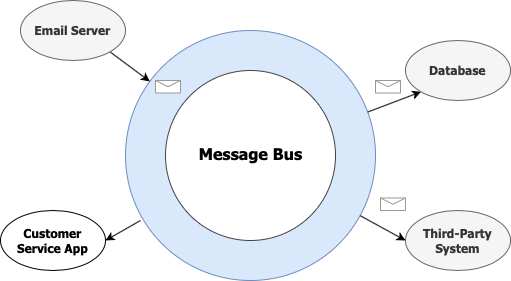
As you can see from Figure 1.10, this allowed data to between different systems more readily and from a variety of systems, which in turn simplified the integration of different systems with the ESB serving as both the message-passing infrastructure, but also the mediator between the systems that provided the protocol transformation.
Figure 2.11: A Pulsar cluster is comprised of a two separate layers; a stateless serving layer consisting of multiple Brokers, and a stateful storage layer consisting of multiple Bookies.

The number of bundles created per namespace is controlled by the
defaultNumberOfNamespaceBundlesproperty inside the broker configuration file, which has a default value of 4. You can override this setting on a per namespace level when you create the namespace by providing a different value when you create the namespace using the Pulsar admin API. In general, you want the number of bundles to be a multiple of the number of brokers you have to ensure that they are evenly distributed. For instance, if you have 3 Brokers and 4 bundles per namespace, then one of the Brokers will be assigned two of the bundles while the others only get one.