concept consumer in category apache pulsar

This is an excerpt from Manning's book Apache Pulsar in Action.
The calling application would then have to wait for the called procedure to return before it could continue processing. The synchronous nature of these architectures made application based upon them inherently slow. In addition, there was the possibility that the remote service was unavailable for a period of time, which would require the application developer to use defensive programming techniques to identify this condition and react accordingly.
Pulsar also supports non-persistent topics, which retains all unacknowledged messages in the broker memory. Non-persistent topic names begin with the “non-persistent://” prefix to indicate this behavior. When using non-persistent topics, brokers immediately deliver messages to all connected subscribers without persisting them.
Listing 2.4 Metadata used to determine topic ownership
/pulsar/bin/pulsar zookeeper-shell    #A
ls /namespace
[customers, public, pulsar]    #B
ls /namespace/customers
[orders]    #C
ls /namespace/customers/orders
[0x40000000_0x80000000]    #D
get /namespace/customers/orders/0x40000000_0x80000000
{"nativeUrl":"pulsar://localhost:6650","httpUrl":"http://localhost:8080","disabled":false}    #D
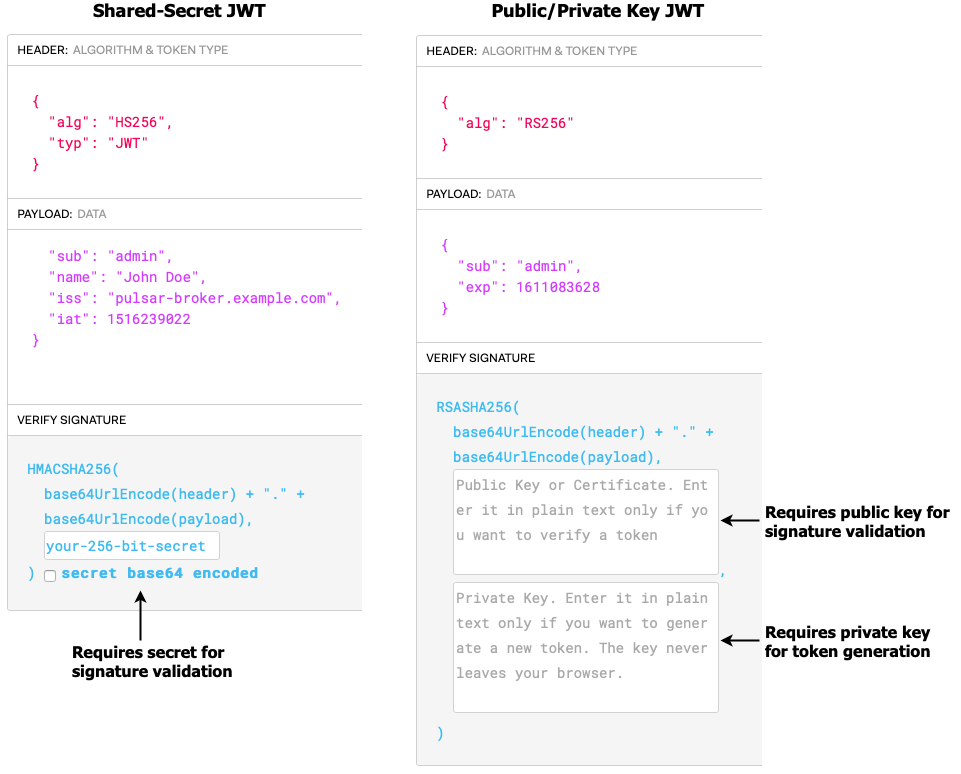
Figure 6.2: Verification Methods for Shared-Secret vs. Public/Private Keypair signed JWTs