concept business value in category api

This is an excerpt from Manning's book Irresistible APIs: Designing web APIs that developers will love.
Figure 1.9. These are examples of different business values with the associated metrics. The most important concept to understand is that you want to have a business value that’s meaningful to people outside of the API team, and metrics should support that value in a way that’s meaningful to your overall organization or company.
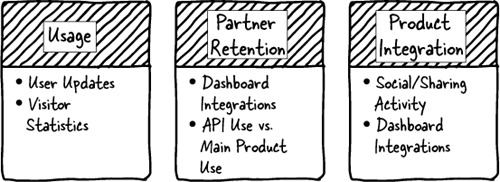
Whatever the business value of your platform, your CEO is going to want to know whether you’re achieving it, and getting buy-in from other teams is much easier if you can demonstrate how your API is doing. You need this information so you can quickly evaluate the API you’re creating, or the effectiveness of changes you make. Figure 1.9 demonstrates some common business values and the metrics you can use to track your progress toward achieving these goals.
Figure 1.9. These are examples of different business values with the associated metrics. The most important concept to understand is that you want to have a business value that’s meaningful to people outside of the API team, and metrics should support that value in a way that’s meaningful to your overall organization or company.
Frequently you’ll see API metrics such as “Number of developer keys in use” or “Number of applications developed,” but that’s an internal type of metric, unlikely to be meaningful to the business value of the platform itself. Developers have to get keys in order to try out your system, and 90% of those keys may be completely inactive and meaningless. Instead, wouldn’t it be great to know which actions your platform is providing for your customers? Or how many users are interacting via the API? Or how many times a day users interact with your system? Or how many of your partners have created integrations into their systems? Increasing engagement with your system is a great goal and relatively easy to measure, though you need to make sure that the actions that are happening are good for your business. Try to think about how your API is enhancing the goals of the company as a whole rather than determining how many people have begun to integrate with your system.
Designing an API should always start with the process of determining business value and how you’ll measure it, followed by determining use cases to make sure you can build your design and strategy with confidence. Doing this for a web API brings it into line with other company products and helps you to both communicate your goals and success to your executive team and make sure your API is staying on track to success. Having these goals and metrics in place will also help you verify that the API is moving in the right direction, so you can determine whether you need to “pivot” your goals, metrics, or use cases to more directly match how client developers are using the API product.
LinkedIn had a complicated API, but it has since been throttled back, largely due to the determination of business value and the excessive cost of providing the majority of its APIs to third-party developers as well as partners. LinkedIn’s success is largely driven by revenue from advertising and recruiting. This revenue is increased by the number of users in the system and how often they interact with the system. LinkedIn wanted to bring new users into the system, engage existing users as frequently as possible, and make it easy for recruiters to find qualified candidates. Because of this they’ve recently focused on a few API-related offerings for developers and content providers. For instance, allowing developers to enable their users to sign in with LinkedIn gives them the opportunity to manage the user identity for those applications, staying at the front of the users’ minds. The sharing widgets, built on a back-end web API, provide content providers with the ability to allow readers to share interesting content within the LinkedIn ecosystem.