concept deployment slot in category azure

This is an excerpt from Manning's book Learn Azure in a Month of Lunches, Second Edition.
When you swap slots, what was live in the production slot is now in the dev slot, and what was in dev is now live in production. Not all settings can swap, such as SSL settings and custom domains, but for the most part, deployment slots are a great way to stage and validate content before it goes live to your customers. You can also perform a swap with preview, which gives you the opportunity to make sure the swapped content works correctly before it’s publicly live in production.
For production use in DevOps workflows, you can also configure Auto Swap. Here, when a code commit is noted in source control such as GitHub, it can trigger a build to an Azure Web Apps deployment slot. When that build is complete and the app is ready to serve content, the deployment slots swap automatically to make the code live in production. You typically use this workflow with a test environment to review the code changes first, not to publish live straight to production!
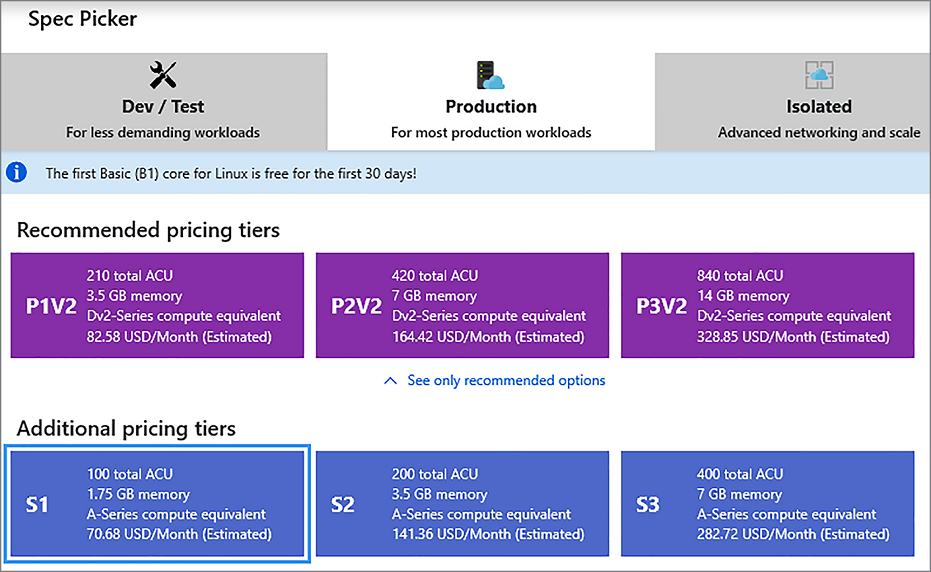
Figure 9.3 To manually scale a web app vertically, you change the pricing tier (size) of the underlying app service plan. The app service plan defines the amount of resources assigned to your web app. If your application requires a different amount of storage, number of CPUs, or deployment slots, you can change to a different tier to right-size the assigned resources to the application demand.