concept number in category azure
This is an excerpt from Manning's book Azure Storage, Streaming, and Batch Analytics: A guide for data engineers.
Most businesses have multiple sources generating data. Manufacturing companies track the output of the machines, employees, and their shipping departments. Software companies track their user actions, software bugs per release, and developer output per day. Service companies check number of sales calls, time to complete tasks, usage of parts stores, and cost per lead. Some of this is small scale; some of it is large scale.
Using ASA, you can read from Event Hubs and write data to a number of targets, including ADLS. ASA can match the throughput of an Event Hub, and automatically recovers from outages and network partitions. Let’s look at what makes an ASA service work.

This is an excerpt from Manning's book Learn Azure in a Month of Lunches, Second Edition.
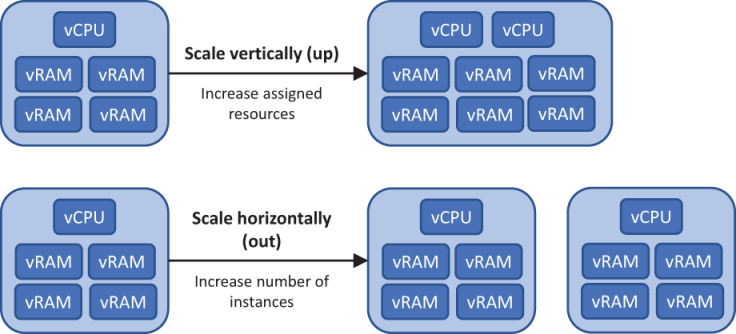
In Azure, you can automatically scale IaaS resources in and out with virtual machine scale sets. These scale sets run identical VMs, typically distributed behind a load balancer or application gateway. You define autoscale rules that increase or decrease the number of VM instances as customer demand changes. The load balancer or app gateway automatically distributes traffic to the new VM instances, which lets you focus on how to build and run your apps better. Scale sets give you control of IaaS resources with some of the elastic benefits of PaaS. Web apps, which we didn’t cover a lot in the past couple of chapters, make a solid reappearance in this chapter, providing their own ability to scale with application demand.
Figure 9.1 You can scale your applications up and down, or in and out. The method you use depends on how your application is built to handle scale. Vertical scale adjusts the resources assigned to a VM or web app, such as the number of CPU cores or amount of memory. This method to scale an application works well if the application runs only one instance. Horizontal scale changes the number of instances that run your application and helps increase availability and resiliency.