concept sqldb in category azure
This is an excerpt from Manning's book Azure Storage, Streaming, and Batch Analytics: A guide for data engineers.
Azure SQL Servers by themselves do not accrue monthly fees. SQL Servers can be moved between resource groups and subscriptions, and take any attached SQLDBs along with them. SQLDBs have three methods for billing: managed instance, stand-alone, and elastic pools. Stand-alone databases are separately managed and billed. Elastic pools group SQLDBs together for shared utilization of resources, much like a traditional SQL Server hosting multiple databases. A managed instance is a PaaS version of SQL Server, managing the server and database backups for you. All three types scale resources using a synthetic metric called DTUs (database transaction units), or a bundle of hardware resources called a vCore. By default, new SQLDBs are created as a stand-alone databases at the lowest vCore tier. You can change this by specifying the tier with the Edition parameter. Allowed values are
At the time of writing, the
DatabaseMaxSizeBytesparameter has no effect on SQLDBs using the DTU model. The maximum DB size is a function of the edition and service level. You can’t use Azure PowerShell to import a bacpac file to a Managed Instance. You must use SSMS or another tool.
Listing 11.6. Create a SQLDB on another SQL Server using the copy command
New-AzSqlDatabaseCopy -ResourceGroupName "ade-prod-eastus2"
<lineArrow/>-ServerName "ade-prod-eastus2-sql" -DatabaseName "ade-prod-playerstats"
<lineArrow/>-CopyResourceGroupName "ade-dev-eastus2"
<lineArrow/>-CopyServerName "ade-dev-eastus2-sql"
<lineArrow/>-CopyDatabaseName "ade-dev-playerstats_2020_02_02_13_00"
<lineArrow/>-ServiceObjectiveName "S0"
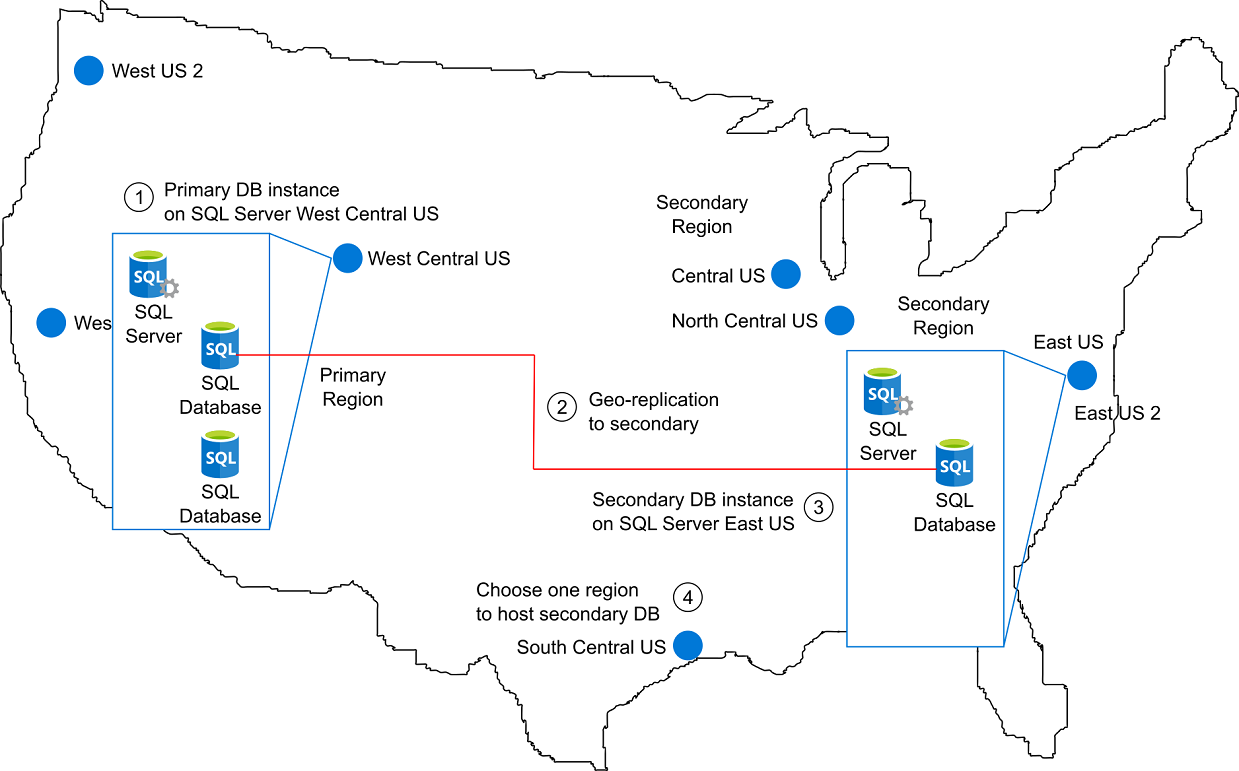
Figure 11.3. Geo-replication of SQLDBs