concept assumption in category BDD

This is an excerpt from Manning's book BDD in Action Second Edition.
Examples play a primary role in BDD, simply because they’re an extremely effective way of communicating clear, precise, and unambiguous requirements. Specifications written in natural language are, as it turns out, a terribly poor way of communicating requirements, because there’s so much space for ambiguity, assumptions, and misunderstandings. Examples are a great way to overcome these limitations and clarify the requirements. Examples are also a great way to explore and expand your knowledge. When a user proposes an example of how a feature should behave, project team members often ask for extra examples to illustrate corner cases, explore edge cases, or clarify assumptions. Testers are particularly good at this, which is why it’s so valuable for them to be involved at this stage of the project.
Teams use collaboration practices such as Pirate Canvases and Impact Mapping to identify business value and opportunities, to understand what features might deliver this value, and to highlight assumptions and risks.
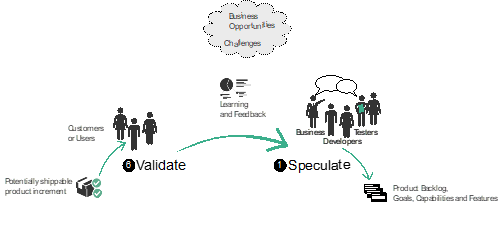
Figure 3.2 The Speculate and Validate phases act as a feedback look where hypotheses and assumptions about features can be validated once they have been delivered.