concept solution in category c#

This is an excerpt from Manning's book Dependency Injection in .NET.
Visual Studio makes it easy and natural to work with solutions and projects in this way. If we need functionality from a different library, we can easily add a reference to it and write code that creates new instances of the types defined in these other libraries. Every time we add a reference, we take on a DEPENDENCY.
Similar to the two previous chapters in this part of the book, this chapter is organized as a catalog—this time of problems and solutions (or, if you will, refactorings). Figure 6.1 shows the structure of the chapter.
Figure 6.1. The structure of this chapter is a catalog of refactorings or solutions to common DI issues. Each of the sections can be read independently.
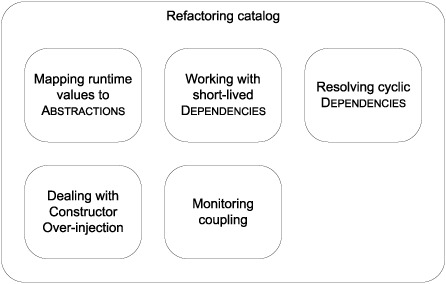
In each section, I’ll present a common issue and how you can address it, including an example. You can read each section independently or in sequence, as you prefer. The purpose of each section is to familiarize you with a solution to a commonly occurring problem so that you’ll be better equipped to deal with it if it occurs.

This is an excerpt from Manning's book ASP.NET MVC 2 in Action.
Your model object might not show up at first, so make sure you’ve built the solution before opening this dialog box. Also, your namespace might differ from the one shown in figure 1.11.
REST isn’t useful just as an architecture for rendering web pages. It’s also a means of creating reusable services. These same URLs can provide data for an Ajax call or a completely separate application. In some ways, REST is a backlash against the more complicated SOAP-based web services, as the complexity of SOAP often brought more problems than solutions.