concept microservice in category camel
This is an excerpt from Manning's book Camel in Action.
We wanted to bring you the most up-to-date material, so, because the IT industry is evolving constantly, we decided to wait and write chapters 7 and 18 last. This chapter covers using microservices with Camel, and chapter 18 is a natural continuation that goes even further and takes the microservices world into the cloud by using container technology such as Docker and Kubernetes. This chapter stays down-to-earth and is mainly focused on running locally on a single computer or laptop.
We initially wrote a lengthy chapter introduction to talk about how the software is eating the world, how businesses are being disrupted, and how new emerging businesses are doing business in a faster and more agile way, where microservices are instrumental. But we felt there are much better authors who can explain all that, and we mention two of them at the start of section 7.1.
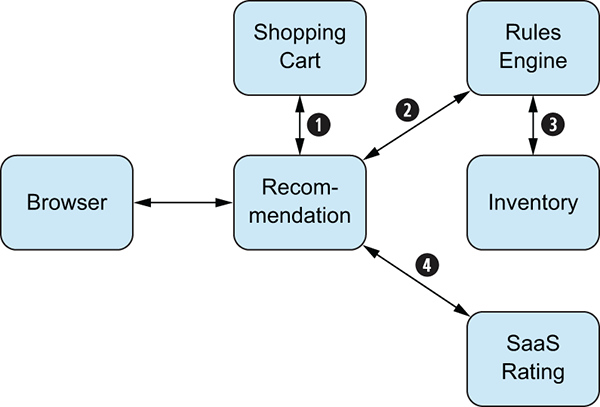
The previous prototype you built was a set of microservices that collectively implemented a recommendation system for Rider Auto Parts. But the prototype wasn’t designed for failures. How can you apply fault-tolerance to those microservices? This section details what you did during the weekend to add fault-tolerance to your prototype.
First, figure 7.9 illustrates the collaborations among the microservices and the places where they’re in trouble.
Figure 7.9 Rider Auto Parts recommendation system. Each arrow represents a dependency among the microservices. Each number represents places where you need to add fault-tolerance.