concept Figure in category chatbot

This is an excerpt from Manning's book Building Chatbots with Microsoft Bot Framework and Node.js.
However, a chatbot could accomplish the same goal in a more efficient way. You could just ask it to find a hackathon by theme, place and date naturally like you would ask a friend. The conversation between a user and chatbot to find a hackathon is shown in Figure 1.2.
Dialog management is the process of managing and implementing a conversational flow. Implementing conversational flows means writing the code to achieve the conversational flow diagrams we built using the design principles learnt in chapter 2. The main goal of a dialog management system is to find a reply or an answer to the user question. This reply could be a direct answer to the question like we have implemented in the previous chapters. The conversational flow diagram for answering that question is shown in Figure 5.1.
Figure 5.1 A simple conversational flow with direct reply to a question where the user sends a message and gets a placeholder response.
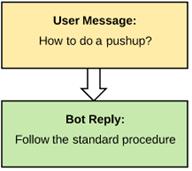
The conversational flow in Figure 5.1 shows the basic conversation we implemented in the previous chapter where we answered questions about workouts. The response is currently hardcoded for pushups and we will change that when we discuss about API integration in a later chapter.
However, in practice we will often encounter cases where we need to handle more complicated conversational flows. The complex conversational flow shown in the Figure 5.2 has branches at multiple levels and the final outcome of the query depends on the choices made by the user. Even the simple example in Figure 5.1 needs dialog management but it becomes more important when we need to handle and implement complicated conversational flows like the one shown in Figure 5.2.