concept - time in category clojure

This is an excerpt from Manning's book The Joy of Clojure, Second Edition.
With the release of Clojure 1.1, the granularity of Clojure’s laziness was changed from a one-at-a-time model to a chunk-at-a-time model. Instead of walking through a sequence one node at a time, chunked sequences provide a windowed view (Boncz 2005) of sequences some number of elements wide, as illustrated here:
There are legitimate concerns about this chunked model, and one such concern is the desire for a one-at-a-time model to avoid exploding computations. Assuming you have such a requirement, one counterpoint against chunked sequences is that of building an infinite sequence of Mersenne primes.[4] Implicit realization of the first 32 Mersenne primes through chunked sequences will finish long after the Sun has died.
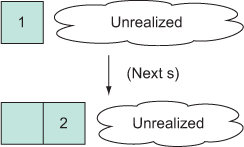
Figure 15.2. Using seq1, you can reclaim the one-at-a-time sequence model. Although not as efficient as the chunked model, it does provide total sequence laziness.
Clojure may one day provide an official API for one-at-a-time lazy sequence granularity, but for now seq1 will suffice. We advise that you instead stick to the chunked model, because you’ll probably never notice its effects during normal usage.