concept entity in category cloud

This is an excerpt from Manning's book Google Cloud Platform in Action.
The primary storage concept in Cloud Datastore is an entity, which is Datastore’s take on a document. From a technical perspective, an entity is nothing more than a collection of properties and values combined with a unique identifier called a key.
An entity can have properties of all the basics, also known as primitives, such as
Saved entity: { key:
   Key {
     namespace: undefined,
     kind: 'TodoItem',
     parent:
      Key {
        namespace: undefined,
        id: 5629499534213120,
        kind: 'TodoList',
        path: [Getter] },
     path: [Getter],
     id: 5629499534213120 },
  data: { name: 'Milk', completed: false } }
Cloud Datastore charges for operations on entities, meaning the more data you interact with, the more you pay.

This is an excerpt from Manning's book Azure in Action.
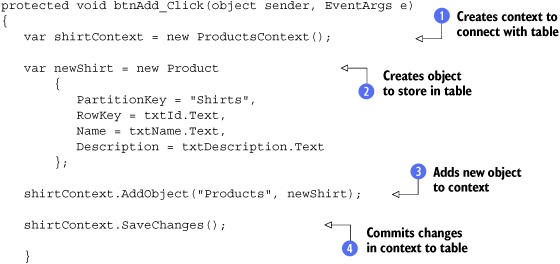
How can we modify an entity so it can be stored in the Table service? How is an entity stored in the Table service?
Due to the flexible nature of the Table service, you could even store entities of different types in the same table. For example, you could store the Product entity in the same table as a completely different entity, such as this Customer entity:
[DataServiceKey("PartitionKey", "RowKey")]
public class Customer
{
   public string Timestamp{ get; set; }
   public string PartitionKey { get; set; }
   public string RowKey { get; set; }
   public string Firstname { get; set; }
   public string Surname { get; set; }
}
As you can see from the Customer entity, although the entity must contain the standard properties (Timestamp, PartitionKey, and RowKey) no other properties are shared between the Customer and Product entities; they even have different class names.