concept job in category data

This is an excerpt from Manning's book Build a Career in Data Science.
Often, the most helpful thing in preparing for an interview is getting into the mindset of what it will be like. Being comfortable answering questions and thinking in a way that is well suited to the fast-paced thinking of an interview can mean the difference between getting the job and not. Thus, we’ve provided example interview questions for you to think about and understand. You should view these questions in conjunction with chapter 7, which discusses how to view the interview process as a whole.
In this chapter, we’re going to walk you through what to expect in your first few months and how to use them to set yourself up for success. These months will have an outsize impact on how the job goes; this is your chance to set up a system and support network that will allow you to be successful. Although each data science job is different, some broad patterns and principles apply to any job.
When you start working, you’ll instinctively want to get as much done as possible. Fight that instinct. You need to be sure that you’re not just accomplishing tasks, but doing them in the right way. When you’re starting a job is the easiest time to ask questions about how something should be done, because you aren’t expected to know the processes at your new company. Managers occasionally forget that you don’t have the institutional knowledge that your predecessor may have had, so you might get tasked with something that doesn’t make sense to you. You might be able to fake your way through the first few tasks, but you’ll be much better served by asking questions early and finding out how to approach your work process.
This is an excerpt from Manning's book Mastering Large Datasets with Python: Parallelize and Distribute Your Python Code.
If we imagine our programs as a software project, we can imagine parallelization as the contractor. The contractor wants to get the job done with as few workers as possible because every new worker added requires the contractor to explain the task to them (which costs time) and pay them (which costs money). Around the margins, this might not matter. But if the contractor has workers sitting around not doing work but getting paid, or they’re spending so much time explaining the project to new workers that they can’t oversee it, the contractor would be better off with a smaller team.
We can work with Spark in interactive mode or by running jobs—this gives us flexibility in our development workflow.
This is an excerpt from Manning's book Hadoop in Action.

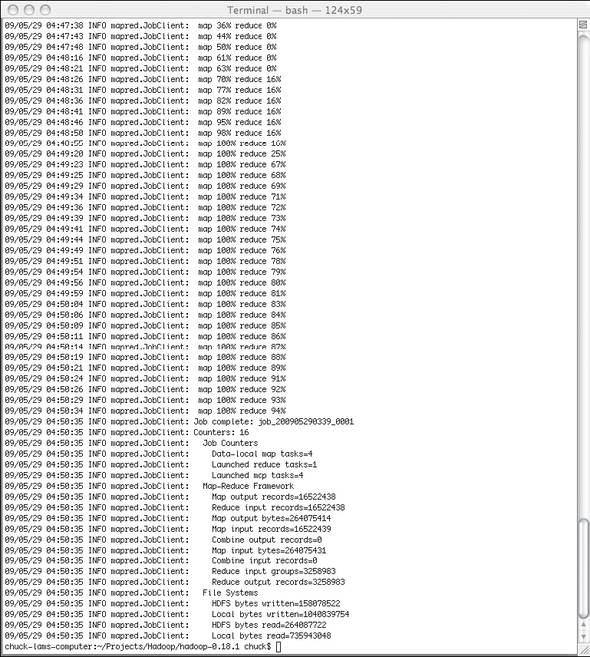
Our data-centric approach to regression testing revolves around “diff’ing” various output files from before and after code changes. For our particular change, we should only be taking out one line from the job’s output. To verify that this indeed is the case, let’s first save the output of our current job. In local mode, we have a maximum of only one reducer, so the job’s output is only one file, which we call job_1_output.