concept quality in category data

This is an excerpt from Manning's book The Art of Data Usability.
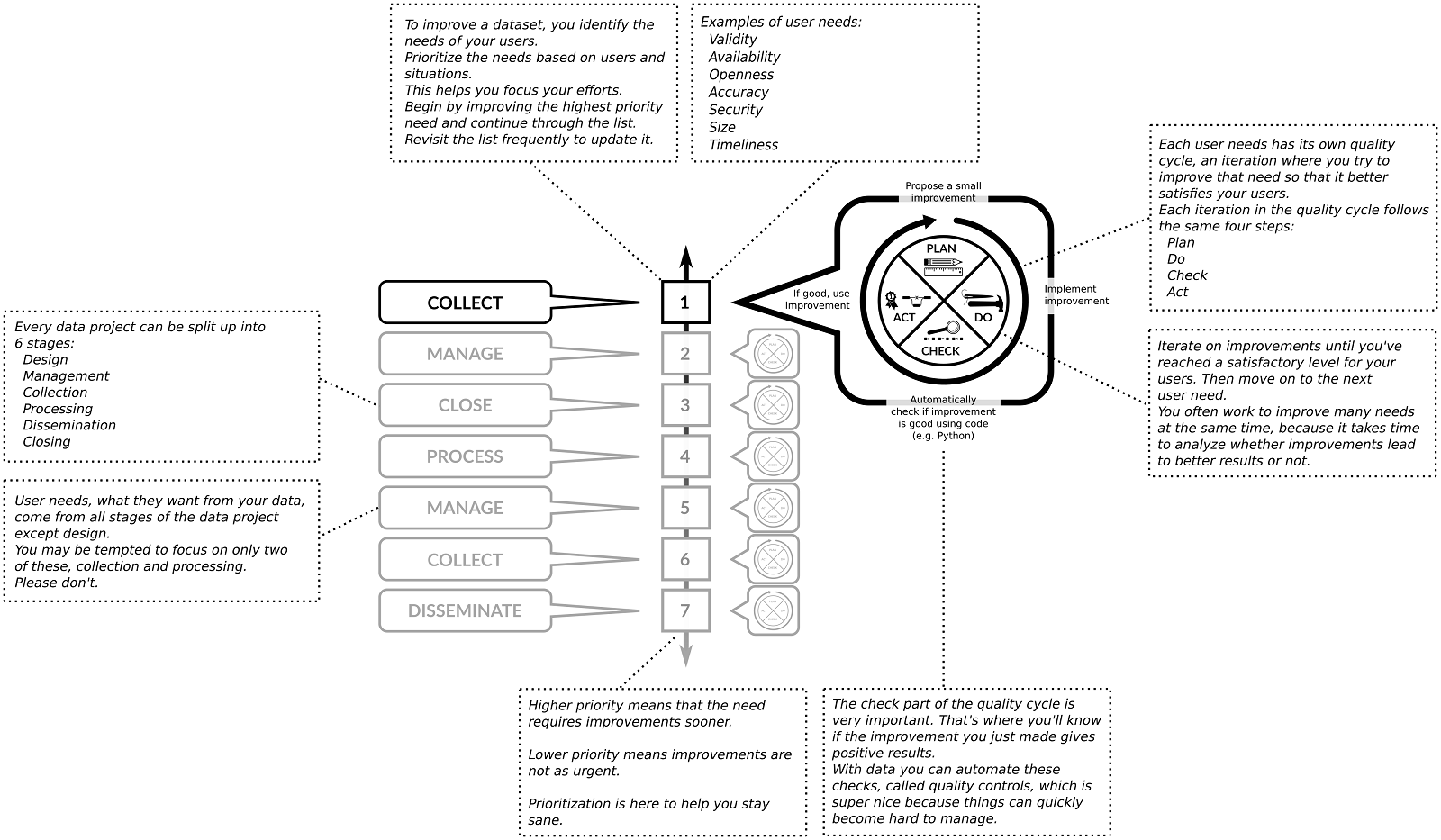
It’s a busy figure but that’s why you have this book. It will familiarize you with the foundations of usability and quality, and provide tips and tricks for you in the process. In each of the chapters in the book I’ll show you this figure and highlight what part of it we’ll be working with in that chapter.
Figure 1.4. Overview of how to work with usability
I assume you have some experience with working with data but you’re more likely not to have a lot of experience with quality. Quality is the foundation of data usability, but there are many definitions for the term quality. My understanding, gained through experience, may not be the same as others you might consult. Therefore, it’s important that we’re on the same page throughout the book (pun intended), so we’ll discuss this important foundation in the next chapter. It introduces the notion of quality and the main process you will use throughout all the different usability improvements in your data projects.
The point is that what we mean by quality varies, depending on the product, situation, and who we are. That doesn’t mean we define quality differently. We have different expectations, and quality is all about expectations. The definition of a quality community depends on the expectations of a community member. Quality is therefore a highly personal or circumstantial metric.
Figure 12.2. Two quality controls to check the quality of a single attribute