concept unstructured datum in category deep learning

This is an excerpt from Manning's book Deep Learning with Structured Data.
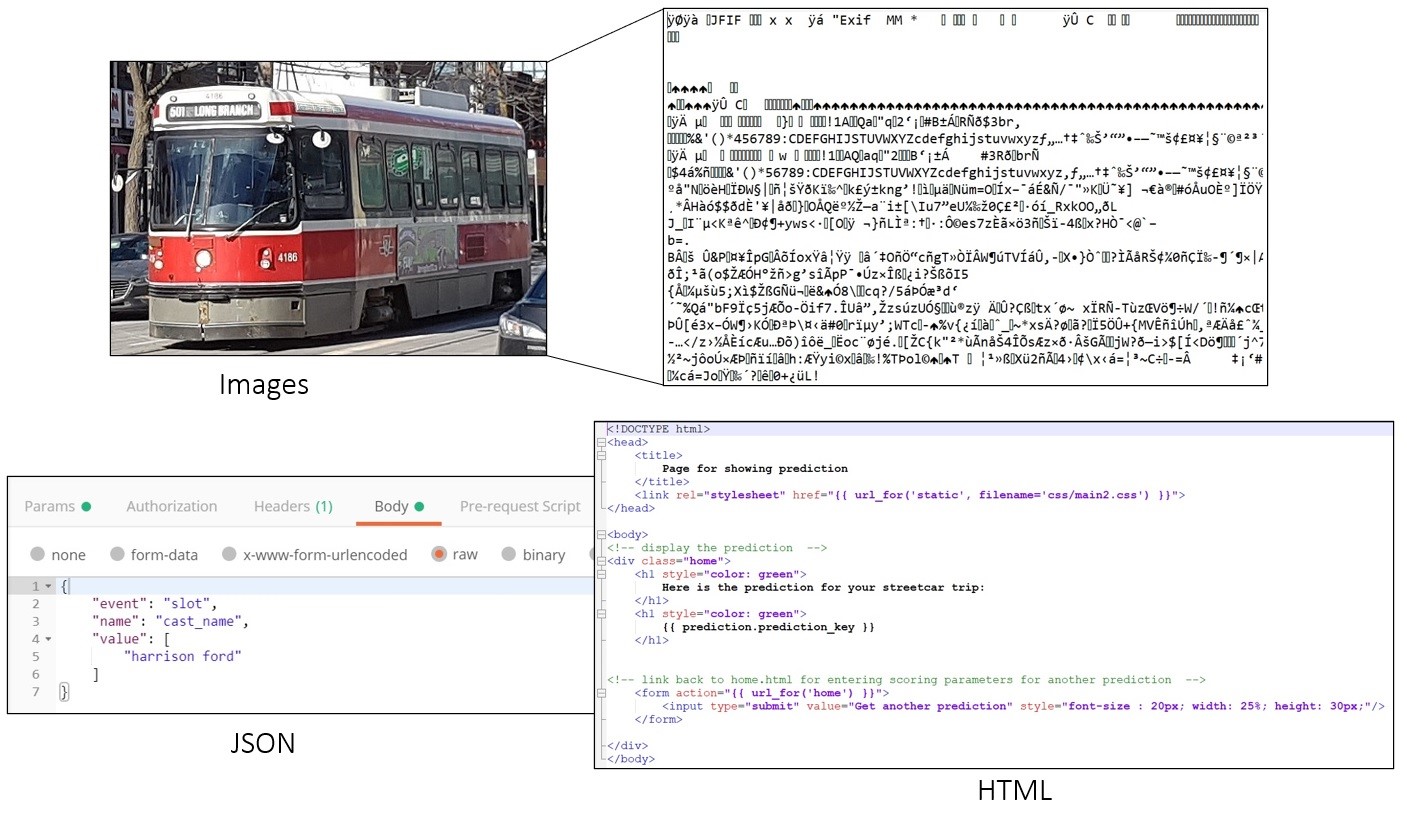
For the purposes of this book, the kind of data we will not be looking at is unstructured data. That is, data that is not organized to reside in a tabular form in a relational database. Unstructured data includes image, video, and audio, as well as text and tagged formats like XML, HTML, and JSON. By this definition, unstructured data doesn’t necessarily have zero structure. For example, the key/value pairs in JSON are a kind of structure, but in its native state JSON is not organized in a tabular form with rows and columns, so for the purposes of this book it is unstructured. To complicate matters further, structured data can contain unstructured elements, such as columns in a table that contain free-form text or that refer to XML documents or BLOBs (binary large objects).
Figure 1.6 Examples of unstructured data
There are many books that cover applications of deep learning to unstructured data like images and text. This book takes a different direction by focusing exclusively on deep learning applied to tabular structured data. The next two sections provide some justification for this focus on structured data, first by discussing some of the reasons why you might be skeptical about a focus on structured data, and then by reviewing the benefits you can get by exploring a structured data problem using deep learning.