concept Liskov Substitution Principle in category dependency injection

This is an excerpt from Manning's book Dependency Injection.
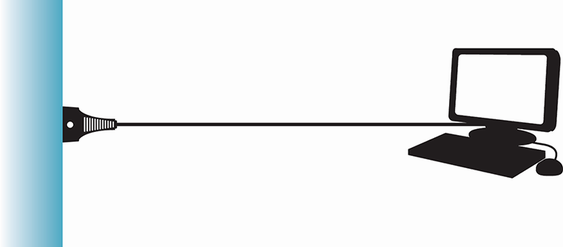
Figure 1.5 Using a socket and a plug, you can replace the original hair dryer from figure 1.4 with a computer. This corresponds to the Liskov Substitution Principle.
When it comes to DI, the Liskov Substitution Principle is one of the most important software design principles. It’s this principle that enables us to address requirements that occur in the future, even if we can’t foresee them today.
As it was originally stated, the Liskov Substitution Principle is an academic and abstract concept defined by Barbara Liskov in 1987. But in object-oriented design, we can paraphrase it as follows: “Methods that consume Abstractions must be able to use any class derived from that Abstraction without noticing the difference.”
We must be able to substitute the Abstraction for an arbitrary implementation without changing the correctness of the system. Failing to adhere to the Liskov Substitution Principle makes applications fragile, because it disallows replacing Dependencies, and doing so might cause a consumer to break.