concept behavior in category design

This is an excerpt from Manning's book Object Design Style Guide.
The language has a standard library that offers functions like strpos(), file_get_contents(), and json_encode(), and global constants for influencing the behavior of these functions: originalJsonData = file_get_contents('/path/to/file.json'); decodedData = json_decode(originalJsonData); jsonDataEncodedAgain = json_encode( decodedData, JSON_THROW_ON_ERROR | JSON_FORCE_OBJECT?);
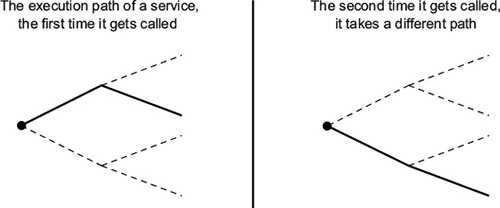
We’ve discussed earlier how services should be created in one go, with all their dependencies and configuration values provided as constructor arguments. When it comes to changing the behavior of a service object, the constructor is again the place to be. Always prefer using a replaceable constructor argument when you want to influence the behavior of a service.

This is an excerpt from Manning's book Design for the Mind: Seven Psychological Principles of Persuasive Design.
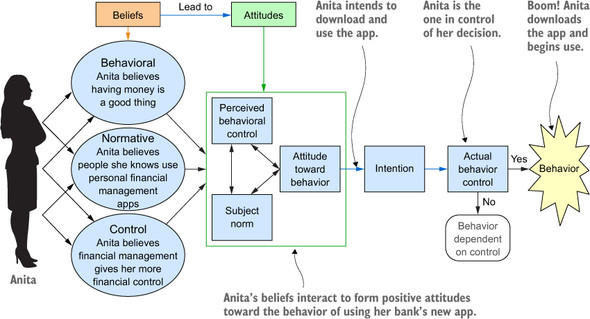
Your users’ decision to engage in a behavior is the outcome of their beliefs and attitudes toward the behavior, whether they think that behavior is socially acceptable, and if they think they have the power to make the final decision about the behavior. Beliefs and attitudes do a funky dance together (figure 2.1), leading to intention. Intention links directly to behavior. If you account for these factors in your design, you should be able to predict with relative accuracy what a user’s end behavior will be: use of your product.
Users don’t always do something just because they say they will. Intention is whether a person intends to engage in a behavior—yes or no. Many people can become distracted or feel they need more time to consider making a decision.