concept disposition effect in category design

This is an excerpt from Manning's book Design for the Mind: Seven Psychological Principles of Persuasive Design.
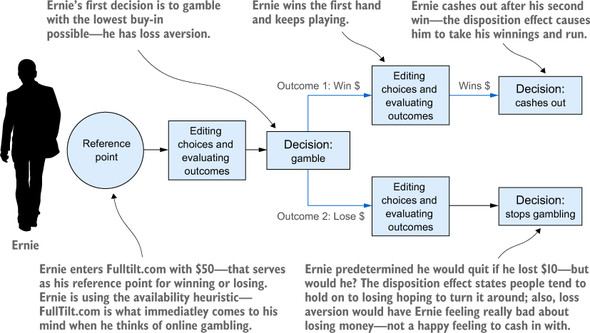
The disposition effect states that people tend to jump out of an investment too soon when an opportunity exists for a gain. People also want to hold on to get back to break-even if they’ve had a loss. We see the disposition effect in many other contexts outside of investments. We often see users who will sign up for a free trial or limited version of a product, but never move ahead with purchasing the full version. They take the immediate win of a free product and cash out before benefiting from the full functionality. We also see users who fail to upgrade products or hardware, the equivalent of holding on to a loser too long. We all know the person who is still suffering from poor performance and lack of compatibility with current apps because they refuse to update their smartphone to one that’s been released within the past three years.
SiriusXM satellite radio has designed its online marketing and promotions to address the disposition effect of cashing out early (figure 3.9). People often receive a free three-month trial of the SiriusXM product after purchasing a new or used car. The disposition effect would suggest most people would then let their subscriptions lapse after the “win” of three free months. Sirius begins to promote renewal to users as soon as the free trial starts. They offer users another five additional months at a discounted rate to continue with the subscription. Sirius is hoping that after eight months of free or discounted service, users will be willing to pay full price to stay on as customers (or maybe they offer additional discounts at that time).