concept social identity in category design

This is an excerpt from Manning's book Design for the Mind: Seven Psychological Principles of Persuasive Design.
Let’s compare how two designers, Brainy and Dr. K., separately discuss with a potential client why incorporating social interactions into their design should be effective. Brainy doesn’t know much about psychological principles related to design, whereas Dr. K became familiar with the components of social identity (covered in chapter 6) in preparation for the project.
Users and potential users of our products don’t just hang out on social media all day. Users are exploring other social areas of the web, such as blogging, reading and writing product reviews, rating applications, and sharing content they find interesting. Researchers have explored the impact and influence others have on our decisions and behaviors. This chapter focuses on how your design can harness the power of social influence and social identity (figure 6.1) to use the web and other digital channels to increase awareness and use of your product.
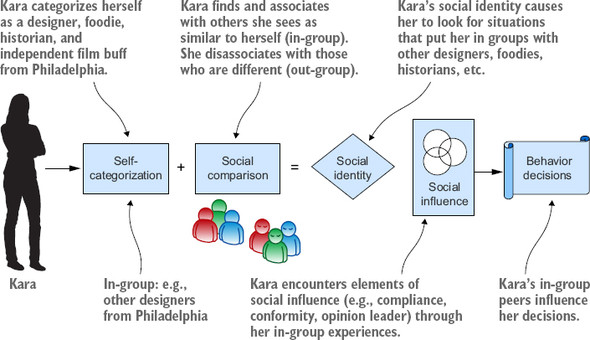
Designing for social identity is all about two things: