concept dsl - base approach in category dsl

This is an excerpt from Manning's book Domain-Specific Languages Made Easy.
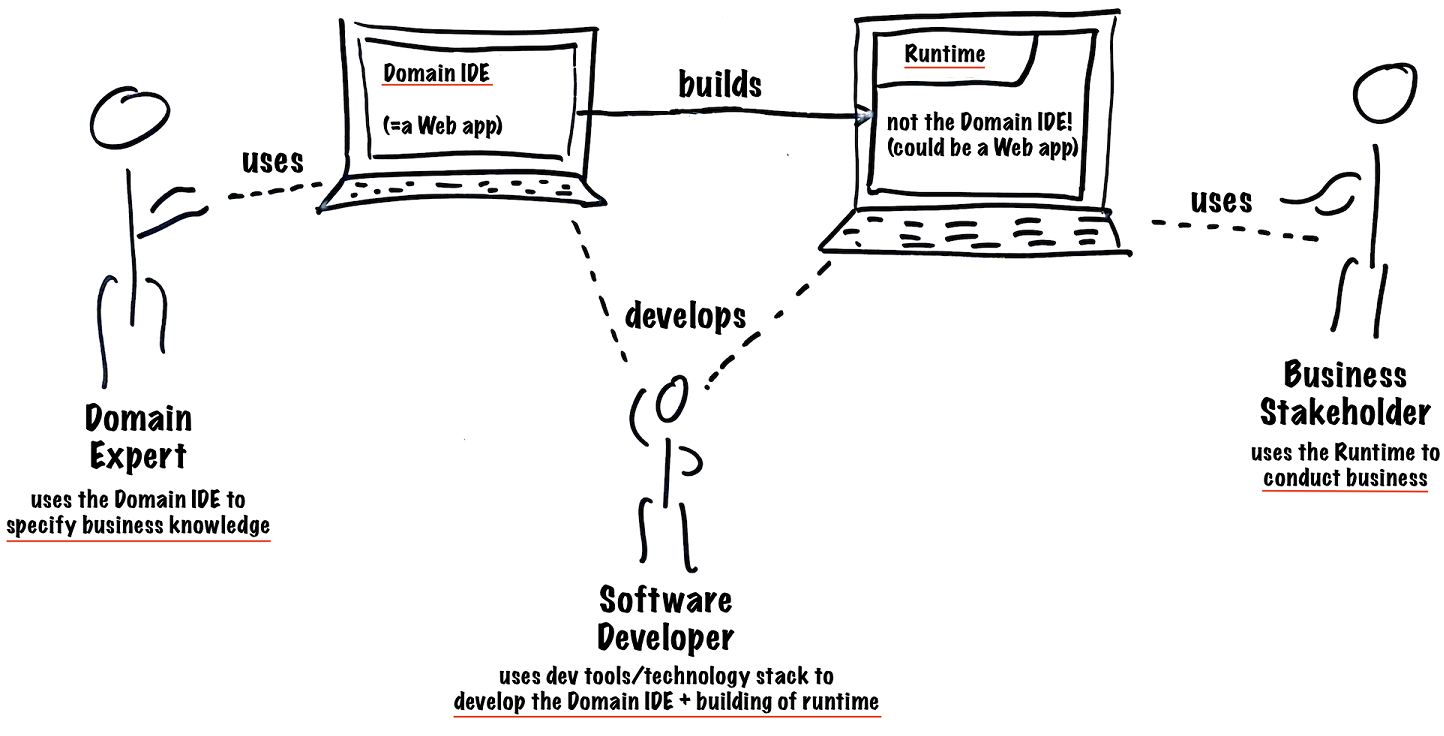
Figure 1.2. Using a DSL-based approach to develop a Runtime using a Domain IDE.
None of this is quantifiable up-front, so we could do with some criteria to have a chance at making the right decisions. The table below lists the major helpful criteria. None of these are really quantitative, but the more boxes you can confidently tick, the likelier it is you could -or even: should- use a DSL-based approach.
Table 1.2. Helpful criteria for judging when a DSL-based approach could be a good idea.
1
The domain is a business domain.
2
The business knowledge to specify is of considerable size.
3
Any piece of knowledge has plenty of detail, with complicated relationships/connections between pieces.
4
The specification is written by more than one person.
5
The specification is based on a set of clearly-identifiable concepts which are applied consistently.
A concept is a construct with a specific and clearly-defined meaning.
In our car rental example, we can already see the following concepts at a glance: business rule, condition, action, record type, attribute.
(There are more, but that’s left as an exercise later on.)
6
The specification contains a lot of expressive “business” logic, along the lines of “When the customer has paid interest in every of the last 12 months, they are eligible to a discount of 10% on the interest of the next month.”.
Award bonus points for if this business logic is naturally or comfortably expressible using business rules.
7
The specification is dynamic: it changes often, and these changes must be propagated to the Runtime quickly.
8
There’s a potentially complicated, but clear path from pieces of the specification to pieces of code for the Runtime.
This implies it’s possible to implement a generator.