concept css in category ember

This is an excerpt from Manning's book Ember.js in Action.
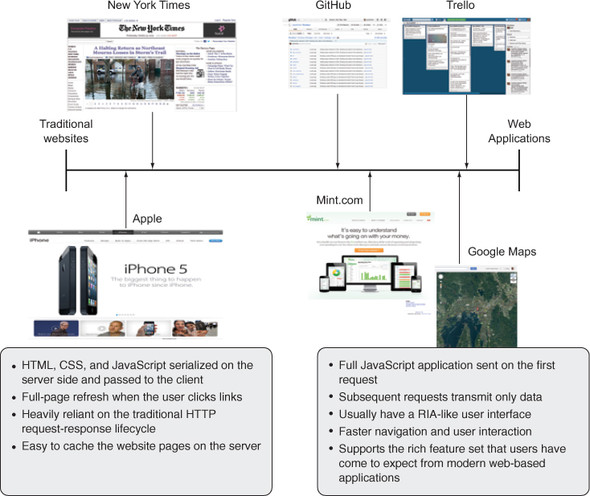
Websites that serve content based on the traditional HTTP request-response lifecycle, such as the websites for the New York Times or Apple Inc., render most of the HTML, CSS, and JavaScript on the server. As shown in figure 1.2 (at left), for each request, the server generates a new, complete copy of the website’s markup.
At the other end of the spectrum are rich internet applications (RIAs), such as Google Maps, Trello, and, to a certain degree, GitHub. These websites aim to define new application types and rival native installed applications, and they render most of their content at the client side. As shown in figure 1.2 (at right), in response to the first request, the server sends a complete application (HTML, CSS, and JavaScript) only once. Subsequent requests return only the data required to display the next page in the application.
css —All the project’s CSS files go directly into this folder.