concept one table in category entity framework
This is an excerpt from Manning's book Entity Framework Core in Action.
EF Core looks at the application’s DbContext and finds all the public DbSet<T>properties. From this, it defines the initial name for the one table it finds, Books.
Sometimes it’s useful to not have a one-to-one mapping from an entity class to a database table. Instead of having a relationship between two classes, you might want to combine both classes into one table. This allows you to load only part of the table when you use one of the entities, which will improve the query’s performance. EF Core provides three alternative ways to map classes to the database, each with its own features:
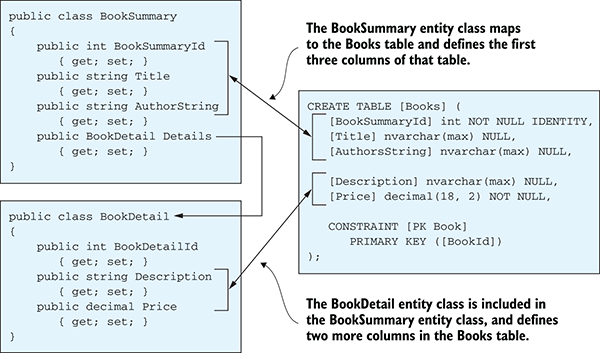
Figure 7.11 The result of using the table-splitting feature in EF Core to map two entity classes,
BookSummaryandBookDetail, to one table, Books. You do this because a book needs a lot of information, but most queries need only theBookSummarypart. The effect is to build a preselected set of columns for faster querying.