concept SQL in category f#

This is an excerpt from Manning's book Get Programming with F#: A guide for .NET developers.
An alternative to using exceptions is to use a result. This is a two-case discriminated union that holds either a Success or Failure. Here, if the call passes, you return a Success with the CustomerId generated by the database. If it fails, you’ll return the error text from SQL as a Failure case.
What’s SQL?
Don’t worry if you’re not an expert—or even a beginner—in SQL. This lesson covers relatively basic areas of SQL and focuses on the F# side of the story. Even if you’ve never used SQL, you’ll still find this a useful lesson—particularly as it shows how type providers can effectively bridge the gap between a foreign language and F#—in this case, T-SQL, which is Microsoft’s query language for SQL Server (based on the SQL standard).
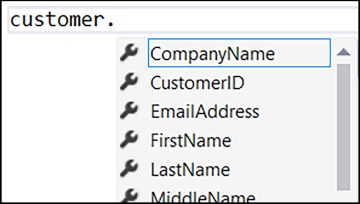
How does the type provider know which table names are valid in your database? How does it know to create a method taking in a value matching the parameter specified in the SQL? This is possible because the type provider validates the SQL against the SQL server itself while generating types (at compile time only; it doesn’t happen at runtime). If the SQL is invalid, it automatically cascades the errors as a compiler error. Similarly, it uses this information in order to understand what arguments the SQL query expects, and then cascades them to the generated types.