concept information in category fusion

This is an excerpt from Manning's book Fusion in Action.
Search engines were the beginning of truly democratized data interaction. They inverted the responsibility of understanding both data and the interfaces to it. No longer are data consumers forced to attend classes to learn languages, syntaxes, and tricks to get to the information they need. Search engines are expected to understand what we want to know and provide a relevant response. If they do not, it is viewed as a shortcoming of the search engine, not the user.
Even before the internet gained popularity, the bulk of information amassed was unstructured. As humans, we typically digest information better in articles and books than we do in tables and spreadsheets. For centuries, scribes recorded, monks copied, and scholars noted. While traditional tables and schemas certainly have their uses, it is search that has made all of the information in books, letters, and documents readily available.
Documents are often the best way for humans to consume data. Most of us would much rather read an analyst’s summary than pore over a spreadsheet and distill the information ourselves. The challenge with documents comes in continuing to reliably find relevant data as the volume increases. Large volumes of documents represent a treasure trove of valuable data. Our job as practitioners is to enable our data consumers to get to the relevant data quickly.
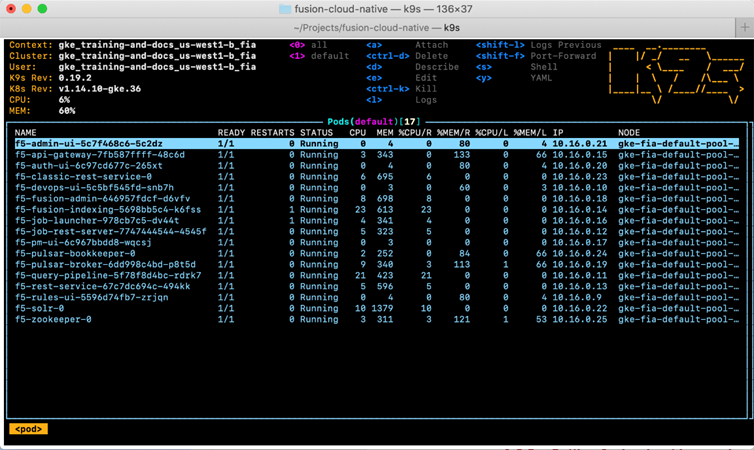
Figure A.1 k9s showing information on a Fusion deployment.