concept context in category gradle

This is an excerpt from Manning's book Gradle in Action - corrected 9052019.
Think of scheduled automation as a time-based job scheduler (in the context of a Unix-based operation system, also known as a cron job). It runs in particular intervals or at concrete times—for example, every morning at 1:00 a.m. or every 15 minutes. As with all cron jobs, scheduled automation generally runs on a dedicated server. Figure 1.3 shows a scheduled build that runs every morning at 5:00 a.m. This kind of automation is particularly useful for generating reports or documentation for your project.
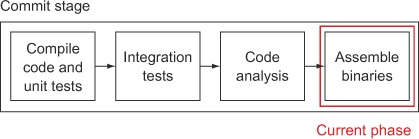
In the context of continuous delivery, publishing your artifact plays a crucial role. Once you package the delivery with a specific version, it’s ready to be deployed to various target environments for acceptance testing or to be given into the hands of the end user. It’s a good practice to build the artifact only once, deploy it to a binary repository, and reuse it whenever needed. We’ll discuss how to apply this concept to your To Do application as part of your build pipeline introduced in the last chapter.
In the context of continuous delivery, there are some important practices to discuss. They ultimately determine how you’ll implement the artifact packaging and publishing.