concept DiningByFriends in category graphs

This is an excerpt from Manning's book Graph Databases in Action.
This chapter follows a four-step process to graph data modeling. First, we’ll start by defining the problem to ensure we understand the details and requirements of the current problem. Then we’ll move on to creating a conceptual data model (i.e. a whiteboard model) of our problem to express the entities and relationships between those entities from a business point of view. Third, we’ll translate this conceptual data model to a logical data model consisting of vertices, edges, and properties, to express the developer’s view of the entities and relationships between those entities. Finally, we’ll test our logical data model against our business understanding, to ensure that our model is capable of satisfying all the requirements of the problem we’re solving. We’ll then conclude the chapter by building a graph data model for the social network use case of DiningByFriends, in a process of learning by doing.
Figure 5 - Our logical graph data model for the social network in DiningByFriends
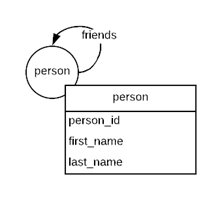
By the end of this chapter, we’ll have completed the working data model for DiningByFriends, and you will have learned additional skills for building better, more scalable data models. However, before we jump into the recommendations and personalization use cases, let’s take a moment and review the current state of our conceptual and logical data models.