concept lock in category graphs
This is an excerpt from Manning's book Neo4j in Action.
In this section, you’ve seen how to programmatically manage transactions when your code needs to interact with the graph. This allows you to define atomic units of work and to have confidence that a successful finish means your changes are durable and that the graph remains in a consistent state at all times. In the next section, we’ll dive a bit deeper into transactions, including how to use locks as a way of controlling the isolation level of read transactions. Although this is not required, it’s something you may do in certain circumstances.
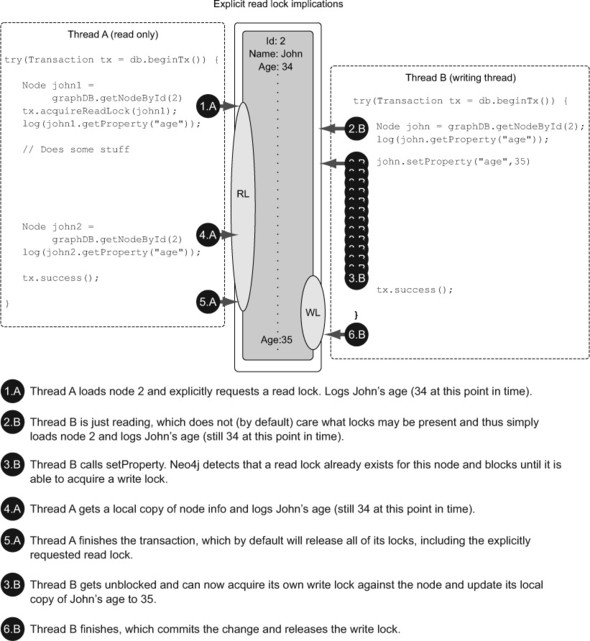
There are two good reasons you should avoid acquiring locks systematically when reading. As previously mentioned, this will generate transactional state, and that uses memory. Second, the main trade-off here is write concurrency, because threads wishing to update any node or relationship where there is an explicit read lock will be blocked until the lock is released or the transaction finishes.