concept algorithm in category graphx

This is an excerpt from Manning's book Spark GraphX in Action.

GraphX is not a database. Instead, it’s a graph processing system, which is useful, for example, for fielding web service queries or performing one-off, long-running standalone computations. Because GraphX isn’t a database, it doesn’t handle updates and deletes like Neo4j and Titan, which are graph databases. Apache Giraph is another example of a graph processing system, but Giraph is limited to slow Hadoop Map/Reduce. GraphX, Giraph, and GraphLab are all separate implementations of the ideas expressed in the Google Pregel paper. Such graph processing systems are optimized for running algorithms on the entire graph in a massively parallel manner, as opposed to working with small pieces of graphs like graph databases. To draw a comparison to the world of standard relational databases, graph databases like Neo4j are like OLTP (Online Transaction Processing) whereas graph processing systems like GraphX are like OLAP (Online Analytical Processing).
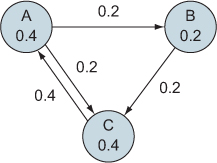
Although the definition of PageRank is recursive, its implementation is a straightforward iterative computation. Figure 5.1, adapted from the 1999 PageRank paper by Page and Brin, “The PageRank citation ranking: Bringing order to the web,” illustrates the algorithm.