concept module in category ios
This is an excerpt from Manning's book Hello! iOS Development.
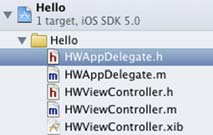
In Xcode, each class has two parts: a header and a module. The header is like a table of contents. It contains a list of everything that objects of this class can do, but no details about how they do it. To use one of a class’s objects, you only need to know what’s in the header. If you poke around Xcode’s Project Navigator, you’ll find headers stored in .h files. The content of the header file is called the interface of the class.
The modules (which are put in .m files) are the actual details of how to do the tasks indicated in a message. The content of a module is called the implementation of the class.
Many times, in the implementation, you send messages to other objects. For example, in the Launderer class’s module, inside the “do my laundry” message, you’d find that it sends messages like “hail a taxicab” and “talk to the driver.” As you have seen, the messages for the driver would be in another class, and the cab’s messages would be in yet another. For example, the driver understands “take me to the laundromat,” and the car understands “go left,” “go right,” and “stop.”
One nice thing about all this is that it makes it possible for you to get some of your classes from other people. Maybe you’re working on a team, and you’re great at writing code for a car, and your teammate is great at writing cabbie code. They don’t need to know how the car does anything, and you don’t need to know the directions to the laundromat. You each work on the modules you understand, and the classes will work together just fine.