concept identity in category istio

This is an excerpt from Manning's book Istio in Action.
An important requirement for any services-based architecture is security. Istio has security enabled by default. Since Istio controls each end of the application’s networking path, it can transparently encrypt the traffic by default. In fact, to take it a step further, Istio can manage key and certificate issuance, installation, and rotation so that services get mutual TLS (transport layer security) out of the box. If you’ve ever experienced the pain of installing and configuring certificates for mutual TLS, you’ll appreciate both the simplicity of operation and how powerful this capability is. Istio can assign workload identity and embed that into the certificates. Istio can use the identity of the different workloads to further implement powerful access-control policies.
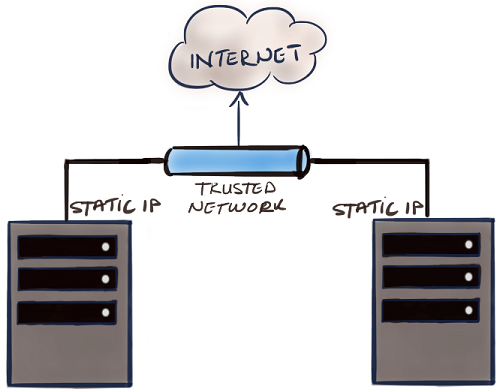
It should come to no surprise that both microservices and monoliths need to implement end-user and service-to-service authentication and authorization, the differences in how those are implemented stems from the sheer number of microservices and all the interconnections between them that need to be protected. Monoliths have fewer interconnections and are running on a static set of virtual machines, which makes IPs a good source of identity, and as such it is used in certificates for authentication. Authorization is either implemented in a reverse proxy or the application.
Figure 8.2. The monolithic application running on-premises with static IPs
Microservices on the other hand easily grow into the hundreds and thousands of services, which makes operating the services in a static environment unmaintainable. For this reason, dynamic environments are utilized such as cloud computing and container orchestration, where services are scheduled into numerous VMs and are short-lived. This makes traditional methods such as the IP a nonreliable source of identity. To put salt into the wound, the services are not necessarily run within the same network either and could span different cloud providers and even run on-premises.