concept operating system in category kubernetes

This is an excerpt from Manning's book Kubernetes in Action, Second Edition.
Kubernetes is like an operating system for computer clusters
One can imagine Kubernetes as an operating system for the cluster. The next figure illustrates the analogies between an operating system running on a computer and Kubernetes running on a cluster of computers.
Figure 1.8 Kubernetes is to a computer cluster what an Operating System is to a computer
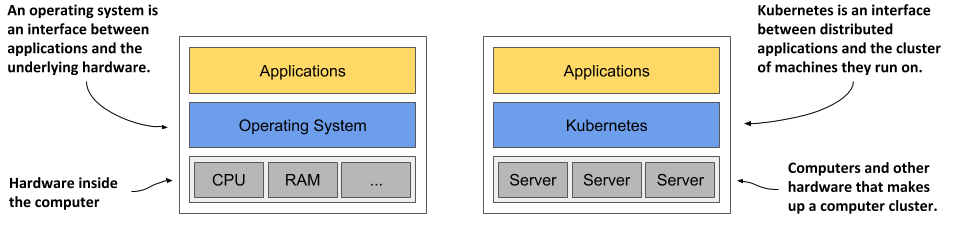
Just as an operating system supports the basic functions of a computer, such as scheduling processes onto its CPUs and acting as an interface between the application and the computer’s hardware, Kubernetes schedules the components of a distributed application onto individual computers in the underlying computer cluster and acts as an interface between the application and the cluster.
This is an excerpt from Manning's book Kubernetes in Action.
These differences range from hardware to the operating system to the libraries that are available on each machine. Production environments are managed by the operations team, while developers often take care of their development laptops on their own. The difference is how much these two groups of people know about system administration, and this understandably leads to relatively big differences between those two systems, not to mention that system administrators give much more emphasis on keeping the system up to date with the latest security patches, while a lot of developers don’t care about that as much.