concept scope in category kubernetes
This is an excerpt from Manning's book Kubernetes in Action.
But what about times when you want to split objects into separate, non-overlapping groups? You may want to only operate inside one group at a time. For this and other reasons, Kubernetes also groups objects into namespaces. These aren’t the Linux namespaces we talked about in chapter 2, which are used to isolate processes from each other. Kubernetes namespaces provide a scope for objects names. Instead of having all your resources in one single namespace, you can split them into multiple name-spaces, which also allows you to use the same resource names multiple times (across different namespaces).
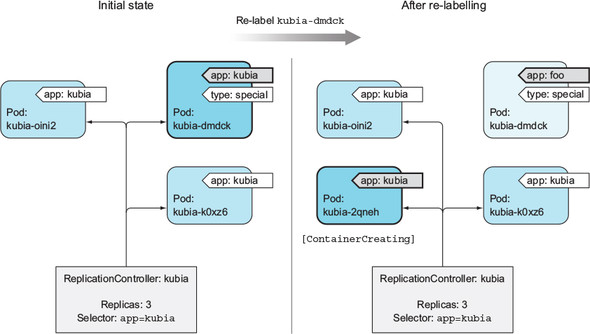
Changes to the label selector and the pod template have no effect on existing pods. Changing the label selector makes the existing pods fall out of the scope of the Replication-Controller, so the controller stops caring about them. ReplicationControllers also don’t care about the actual “contents” of its pods (the container images, environment variables, and other things) after they create the pod. The template therefore only affects new pods created by this ReplicationController. You can think of it as a cookie cutter for cutting out new pods.
Pods created by a ReplicationController aren’t tied to the ReplicationController in any way. At any moment, a ReplicationController manages pods that match its label selector. By changing a pod’s labels, it can be removed from or added to the scope of a ReplicationController. It can even be moved from one ReplicationController to another.