concept object detection in category machine learning

This is an excerpt from Manning's book Human-in-the-Loop Machine Learning.
Most real-world Machine Learning systems use tasks that are more complicated than document-level or image-level predictions. Even problems that sound simple tend to require advanced Active Learning techniques once you dig into them. For example, imagine that you are building a Computer Vision system to help with agriculture. You have smart tractors with cameras that need to distinguish seedlings from weeds, so that the tractors can efficiently and accurately apply fertilizer and herbicides. While weeding fields is one of the most common and repetitive tasks in human history, you need Object Detection within an image, not image-level labels, to automate this task.
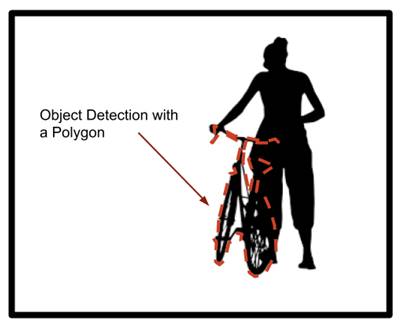
Figure 6.6: An example of object detection using a Polygon, rather than a Bounding Box. You can use the same Active Learning methods for both Bounding Boxes and Polygons, with the extra option to have a closer mask for a Polygon.
Most machine learning tasks are more complicated than labeling an entire image or document. Imagine that you need to generate subtitles for movies in a creative way. Creating transcriptions of spoken and signed language is a language generation task. If you wanted to emphasize angry language with bold text, then this is an additional sequence labeling task. Imagine also that you want to display the transcriptions like the “speech bubbles” of text found in comics. You could use object detection to make sure that the speech bubble comes from the right person and use semantic segmentation to ensure that the speech bubble is placed over the background of the scene instead of people or important objects. You might also want to predict what a given person might rate the film as part of a recommendation system or feed the content into a search engine that can find matches for abstract phrases like “motivational speeches”.