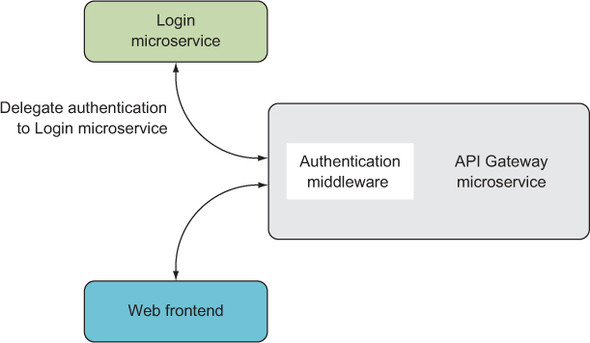
concept authentication in category microservice

This is an excerpt from Manning's book Microservices Security in Action.
Authentication is the process of identifying the requesting party to protect your system against spoofing. The requesting party can be a system (a microservice) or a system requesting access on behalf of a human user or another system (see figure 1.4). It’s rather unlikely that a human user will access a microservice directly, though. Before creating a security design for a given system, you need to identify the audience. The authentication method you pick is based on the audience.
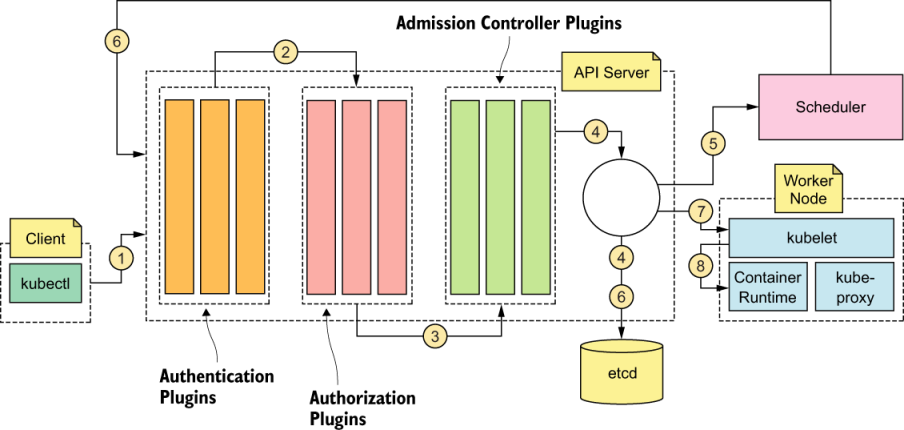
Istio 1.5.0 introduced two new CRDs for authentication: PeerAuthentication and RequestAuthentication. As you will learn in section 12.4.1, prior to Istio 1.5.0, you had to use the same policy to define both mTLS and JWT authentication methods. With the introduction of two new CRDs, Istio 1.5.0 provides a much cleaner way of defining authentication policies based on mTLS and JWT. You can use the PeerAuthentication CRD to define mTLS-based policies, and the RequestAuthentication CRD to define JWT-based policies. If you are on Istio 1.5.0 or later, this method is more recommended than the approach we discuss in section 12.4.1. In section 12.4.3, we discuss PeerAuthentication and RequestAuthentication in detail.
This is an excerpt from Manning's book Microservices in .NET Core: with examples in Nancy.
Security is an important concern for almost any server-side system. It’s also a very broad topic, much of which is outside the scope of this book. We’ll concentrate on two areas of security that are relevant to developers of microservice systems: authentication and authorization, and how to secure communication between microservices.
Most systems have some functionality that’s only accessible to logged-in users. Think about the point-of-sale system discussed in earlier chapters. In chapters 3 and 4, we talked about adding a loyalty program that allows registered users to receive special offers via email, based on their interests. If users are interested in golf, they’ll be notified about good deals on golf balls. If users want to edit their interests—they may have given up golf and taken up quilting, instead—they need to be logged in. Otherwise, one user could edit another user’s interests, resulting in their being notified about the wrong offers. Making sure a user really is who they claim to be is a matter of authentication. Deciding what the user is allowed to do—for instance, that they can edit their own interests but not anyone else’s—is a matter of authorization.
Authentication and authorization are concerns that your systems will probably have regardless of whether you build them with microservices. The difference is that the granular nature of a microservice system begs the question: which microservices handle authentication and authorization? The following two sections address that question.