concept boundary in category microservice

This is an excerpt from Manning's book Microservices in Action.
You’ll find two opposing trends to starting with microservices: monolith first or microservices only. Advocates of the former reason that you should always start with a monolith, as you won’t understand the component boundaries in your system at an early stage, and the cost of getting these wrong is much higher in a microservice application. On the other hand, the boundaries you choose in a monolith aren’t necessarily the same ones you’d choose in a well-designed microservice application.
Chapter 4 discusses microservice scoping — how to define the boundaries and responsibilities of a microservice — in detail.
In a monolithic application, your architecture is limited to the boundaries of the application itself. In a microservice application, you’re planning for something that’ll keep evolving both in size and breadth. Think of it like a city: building a monolith is like building a skyscraper; whereas building a microservice application is like building a neighborhood: you need to build infrastructure (plumbing, roads, cables) and plan for growth (zone for small businesses versus houses).
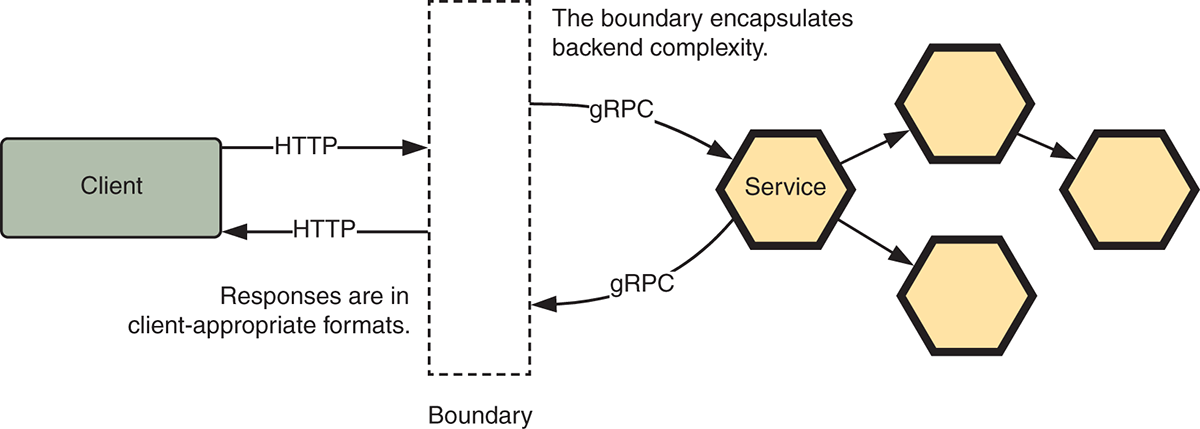
Figure 3.17 A boundary provides a façade over the service layer to hide internal complexity from a consumer.