concept process in category mongoDB

This is an excerpt from Manning's book Getting MEAN with Mongo, Express, Angular, and Node.js 2ED.
Dumping the data sounds like you’re deleting everything from your local development version, but this isn’t the case. The process is more an export than a trashing.

This is an excerpt from Manning's book MongoDB in Action, Second Edition: Covers MongoDB version 3.0.
First, MongoDB should usually be run on 64-bit machines. The processes in a 32-bit system are only capable of addressing 4 GB of memory. This means that as soon as your data set, including metadata and storage overhead, hits 4 GB, MongoDB will no longer be able to store additional data. Most production systems will require more than this, so a 64-bit system will be necessary.[10]
The dropDups option was removed starting with MongoDB 3.x and there’s no direct replacement for the dropDups option. You can either create a new collection, create the unique index on this new collection, and copy all the documents from the old collection to the new one (while making sure that you’re ignoring duplicated key errors during the process), or deal with duplicate key documents manually.
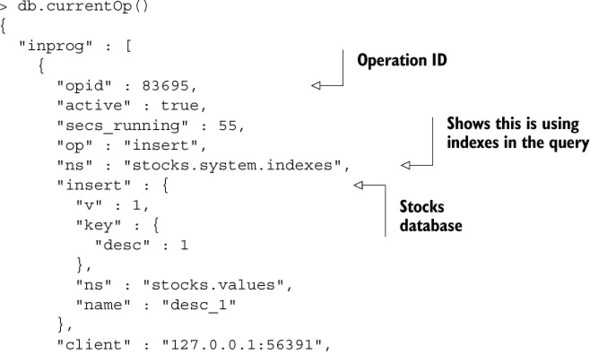
Regardless of why you’re creating new indexes, the process isn’t always pleasing. For large data sets, building an index can take hours, even days. But you can monitor the progress of an index build from the MongoDB logs. Let’s take an example from a data set that we’ll use in the next section. First, you declare an index to be built: