concept version in category .net
This is an excerpt from Manning's book DSLs in Boo: Domain-Specific Languages in .NET.
And that’s it—all the building blocks that you need to write a good DSL. We’re going to spend a lot more time discussing all the things we can do with DSLs, how we can integrate them into real applications, and version, test, and deploy them, but you should now have an overall understanding of what’s involved.
One way of handling versioning is to ensure backward compatibility within a major version of the software, but not guaranteeing backward compatibility between major versions. For example, if you have version 1.0, revisions 1.1, 1.5, and 1.8 are all backward compatible. But version 2.0 isn’t necessarily backward compatible with the 1.x versions.
Another approach is to encode the version using a folder-hierarchy convention:
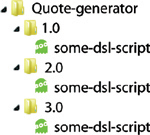
At the same time, you don’t need to care about the versioning of anything new that you create until you reach the next boundary. None of the changes you make from versions 1.0 to 2.0 have versioning implications until you’ve released 2.0. This is important when it comes to considering the regression suite. You shouldn’t include tests there for new features—not until they have been released and instantly become regression tests that you must never break or change.