concept Alice in category quantum computing

This is an excerpt from Manning's book Quantum Computing for Developers: A Java-based introduction.
In this section, you will send the information from a qubit that is held by Alice to a qubit held by Bob. Alice’s qubit stays with Alice though, so we do not physically transfer the qubit. However, the end result is that you transfer some quantum information from Alice to Bob. That sounds very related to the core problem described in the previous sections: a qubit can not be cloned, but if we have a way to transfer its quantum information over a distance, we get much closer to a quantum network.
In the next sections, the algorithm for teleportation will be shown. You will step by step create a program that allows to achieve quantum teleportation, using the techniques and gates that were discussed before. It can be mathematically proven that the algorithm you are about to program indeed teleports the information from Alice to Bob. However, this prove is not in the scope of this book. We will rather artificially give some initial values to the qubit we want to teleport, so that we can later check if the teleportation was succesful.
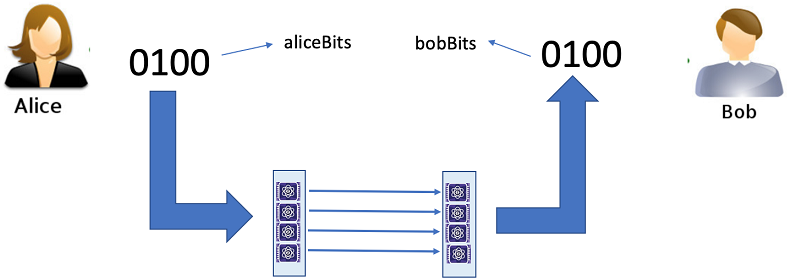
Figure 8.2. Ideal situation in network communication.
if the original bit and the corresponding bit in the pad are equal (both 0or1), the resulting bit is0
if the original bit and the corresponding bit in the pad are opposite (hence 0and1or1and0), the resulting bit is1
The result of this combination is an encrypted bit sequence.
0110  (original message)
1100  (one time pad)
----  (XOR operation)
1010  (result)
Figure 8.7. Alice generates random bits and uses qubits to sent the values to Bob.
Using the techniques you learned in the previous chapters, you can create an application that does this. The following code snippet is taken from the sample
ch08/native: